

The hospitality industry, especially during the peak seasons, has challenges in dealing with seasonal workers. The HR teams do face problems in terms of payroll efficiency and compliance. Payroll outsourcing provides a very logical solution to cut costs, simplify processes, and lighten the compliance burdens, so that businesses can concentrate on core operations.
According to PwC (PricewaterhouseCoopers), a study says that operational costs associated with companies can be reduced by up to 40% by outsourcing payroll services.
The benefits of third-party payroll outsourcing are many and to be achieved with the minimum come from how it has simplified the management of seasonal workforce and its potential impression on the hospitality industry.
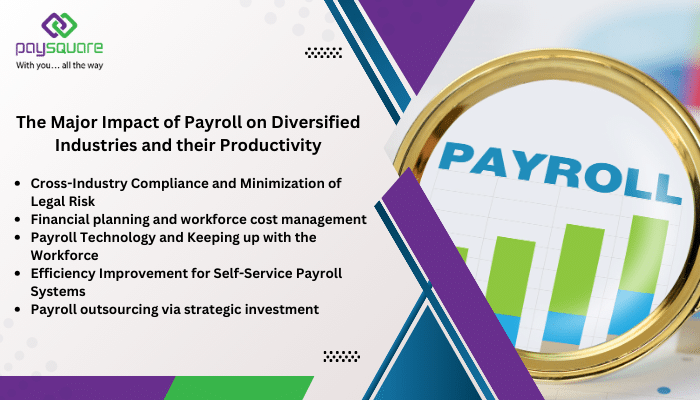
The Major Impact of Payroll on Diversified Industries and their Productivity
Payroll accuracy and consistency directly impact employee satisfaction, engagement, and retention. According to the survey conducted by the Chartered Institute of Personnel and Development (CIPD), 60 percent of employees are more engaged and productive when their payroll services experience higher reliability (CIPD, 2021). Additionally, according to the American Payroll Association (APA), almost 30 percent of an employee’s trust in the management is based on the accuracy and the promptness of the payroll.
The studies show that payroll plays the key role in achieving a happy and productive workplace.
- Cross-Industry Compliance and Minimization of Legal Risk:
Compliance in payroll is a top priority as it can prevent legal risks and financial penalties. According to research by Ernst & Young, companies in nearly every industry face average annual penalties of $20,000 because of payroll compliance errors. The government oversight of the finance and health sectors requires payroll and compliance across industries. The Society for Human Resource Management reports that over 70% of business concerns experience annual payroll-related regulatory changes.
- Financial planning and workforce cost management:
Payroll management system represents one of the most costly and sensitive spends that could influence cash flow and the overall budget. For example, according to Deloitte, proper payroll processing leads to an improvement in financial planning by 25%. Businesses learn how to allocate resources better. Such industries as retail and hospitality depend heavily on payroll forecasts with seasonal variability in the number of laborers. PwC’s report further indicates that of the firms that have an accurate payroll forecast, 75% have cash flow management and are also said to stay financially stable during peak seasons.
- Payroll Technology and Keeping up with the Workforce:
Advances in remote working and the gig economy have made payrolls quite dynamic. The report by ADP recently published showed that 78% of companies realized that payroll technology became essential to work with hybrid and remote teams. Tax compliance in payroll involves an added service where advanced systems manage freelancer payments and employee benefits. Advanced payroll helps businesses in today’s work structure.
According to an IBM report, organizations that implement flexible payroll technology can cut up to 30% of compliance costs.
- Efficiency Improvement for Self-Service Payroll Systems
Self-service payroll systems are gaining popularity to reduce administrative burdens and increase productivity. According to Gartner, they can enhance HR efficiency by 20-30%. As these payroll systems allow employees to update their information and enable employees to view pay stubs on their own, these promote transparency and trust in the payroll management process.
- Payroll outsourcing via strategic investment
Payroll outsourcing deals with even complex payroll processes in an efficient manner. A KPMG study is able to reflect a view by 90% of large enterprises that it increases accuracy and cuts costs. It benefits complex industries because internal teams can then focus on core functions. According to the Everest Group, payroll outsourcing is used by businesses in order to attain a reduction of up to 25% in the cost of payroll administration and 40% with respect to payroll errors.
- Problems in Managing Seasonal Workers
Managing seasonal employees proves to be a challenging exercise in the hospitality industry. Their overtime and gratuity are often up and down with payroll errors during peak seasons, leading to dissatisfied employees and, subsequently, higher turnovers. According to the Society for Human Resource Management (SHRM), timely payroll delivery is also important since it directly impacts job satisfaction and retention.
Seasonal workers often experience irregular schedules, overtime demands, and complex shifts, in addition to having to strictly adhere to labor laws. Often, seasonal workers are not adequately trained to meet industry standards, which negatively impacts performance and engagement. Managing seasonal staff causes strain on the remaining employees, gives way to higher turnover, and creates added burdens for HR and payroll systems.
Then, hours, contracts, and locations have different legal requirements to complicate compliance further. Without an efficient payroll system, these challenges can escalate into serious compliance risks.
Advantages of Payroll Outsourcing for Hospitality Industry
Outsourcing payroll during seasonal peaks offers significant advantages for the hospitality industry. It reduces costs by eliminating the need for in-house payroll staff during peak periods, saving administrative hours and avoiding operational failures. Timely and reliable paycheck processing boosts employee satisfaction, fostering trust and retention among seasonal workers.
Moreover, outsourcing ensures continuity despite high turnover or unexpected staff exits, thus allowing organizations to ensure payroll operations are maintained seamlessly. Handling payroll externally frees up HR teams to focus on strategic priorities such as training employees, while the external firms deliver improved accuracy through automated systems, thereby reducing errors and associated costs.
Furthermore, the best payroll companies are experts in compliance and can pay employees under labor laws, tax legislations, and wages, which means lower risks of legal issues. In general, payroll outsourcing is an efficiency-enhancing and cost-effective way of managing seasonal employees.
How Payroll Outsourcing Streamlines Managing Seasonal Employees
According to a Deloitte report, companies in hospitality, among others, are finding it increasingly impossible to face their operational vagaries when it comes to tax compliance and labour laws, especially as most of these seasonal workers work across different jurisdictions. Seasonal workforce management can be addressed through the following specific solutions offered by payroll outsourcing:
Outsourcing payroll has many payback advantages-in particular, for managing seasonal employees. Auto-payroll systems automatically minimize errors by approximately 30%, as research by ADP indicates, and accordingly manage changing workforce sizes. Additionally, onboarding and offboarding are streamlined by managing the paperwork to sign on and off agreements and to provide tax documentation.
Actually, outsourcing ensures that the partners are updated on the changing laws so as to avoid being fined and maintaining business standards. Furthermore, it ensures timely and accurate payments in creating trust and reliability with seasonal workers. With payroll outsourcing, companies have a lot of flexibility about when they pay, which heightens the cost efficiency and changes and grips of seasonal peaks.
The Role of Payroll Outsourcing in the Hospitality Sector’s Future
As the hospitality industry undergoes a transformation, the role of payroll outsourcing is more likely to be of great importance. According to Grand View Research, a market research major, the global payroll outsourcing market, measured in terms of revenue generated, will grow at a compound annual rate of 7.32% during the period from 2023 through 2030. Here is how it may shape the future of the industry:
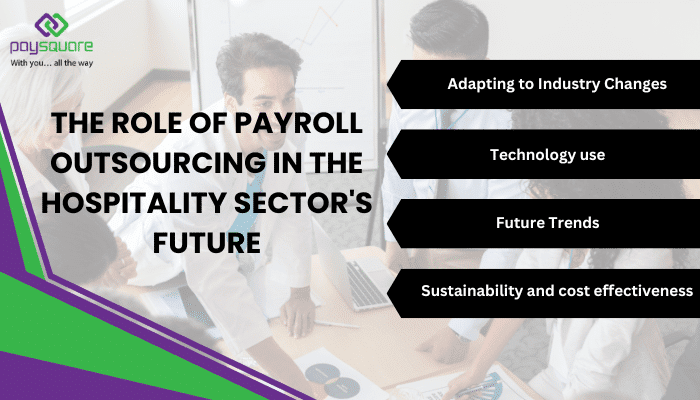
1. Adapting to Industry Changes: Payroll outsourcing helps hospitality businesses adapt to changing demand and worker needs. This flexibility is important because the industry can shift in various ways-if it fluctuates due to variable guest volumes, or if there is a shift in labor supply.
2. Technology use: The third-party companies are investing in more advanced technologies, such as AI applications of cloud systems and data analytic for better payroll management to make data-driven decisions on a large seasonal workforce.
3. Future Trends: Payroll outsourcing would be more personalized and scalable with solutions on metrics toward employee performances and benefits administration, deeply integrated with HR tech platforms, as the nature and scope of technology change.
4. Sustainability and cost effectiveness: Outsourcing eliminates paper records and manual processes due to which sustainability and cost-effectiveness can be improved. Savings can be re-invested in enhancing service quality and improving employee experience.
The prospects for the outsourcing of payroll in the hospitality industry appear bright, given the powerful solutions that can assist both in workforce management and working in compliance.
What Benefits will this Payroll Outsourcing Solution bring to the Industries through Paysquare?
Payroll management for seasonal hospitality employees can be complicated, but Paysquare simplifies the process, looking to assist both small businesses and large corporations. Their services can help streamline onboarding and exits, ensuring that these organizations can easily update payroll to accommodate seasonal staff transitions and ad hoc labor law compliance requirements.
Paysquare also ensures regulatory compliance by handling tax and statutory obligations such as ESIC, PF, and PT, thereby relieving the burden on HR and finance teams. With their offshore payroll solution called DeliziaHR, Delizia takes care of all the processing and other matters independently, from hour’s wages to variable contracts and more, that in turn reduces in-house resource needs and saves cost.
So, Why Payroll Outsourcing with Paysquare?
Paysquare boasts an impressive payroll accuracy of 99.95% and manages payroll for more than 1,500 clients worldwide. DeliziaHR provides radical, hassle-free as well as easy-to-use payroll management for efficient and pleasurable service. Integration with these payroll and compliance tools is easy and accurate, thereby allowing hospitality businesses to focus on their core business rather than payroll paperwork.
Paysquare offers flexible solutions depending on the needs of businesses for the management of payrolls for small, medium-sized, or large companies and ensures smooth, cost-effective payments.
Conclusion
Outsourcing payroll transforms the hospitality industry since it improves accuracy in the payroll system, ensures adherence to the law, increases employee satisfaction, and saves HR teams from the burden of paperwork. A 2023 Gallup survey revealed that using third-party payroll services for seasonal staff helps companies experience greater flexibility and operational efficiency than managing payroll in-house. This strategic approach brings a strong foundation for agile and effective business models, helping HR managers, entrepreneurs, and hospitality leaders.
Ease your payroll with Paysquare, which has more than 700 experts and boasts a satisfaction rating of 98.9%. Paying attention to compliance and innovation, Paysquare works with the vision to redefine management experiences in hospitality with DeliziaHR.
FAQs
1. How To Handle Seasonal Workers in Your Payroll System?
Payroll outsourcing would ease the management process for seasonal workers-it would automatically enable payroll, onboarding, and offboarding. This would allow for less administrative burden on temporary staff and errors during peak seasons.
2. What is the cost-saving benefits of using payroll outsourcing companies in India for the hospitality sector?
This means that without having in-house staff and complex systems, outsourcing payroll is cost-effective. Indian payroll outsourcing companies offer fast, compliant services significantly reducing operational costs for hospitality businesses.
3. What are the challenges hospitality businesses face in handling seasonal payroll internally?
Managing seasonal payroll in-house often struggles with employment terms, compliance and fluctuating headcounts, resulting in errors, delays, and issues around compliance, which harms employee morale and increases the risk of penalties.