
When a company hires someone, the same set of details gets collected, entered, and re-entered more times than anyone realizes.
Payroll and recruitment are usually run as separate systems, and that is where inaccuracy comes up. The candidate details collected during hiring are the same ones payroll needs to pay someone and file their statutory dues, yet most companies enter that data twice before the first salary runs.
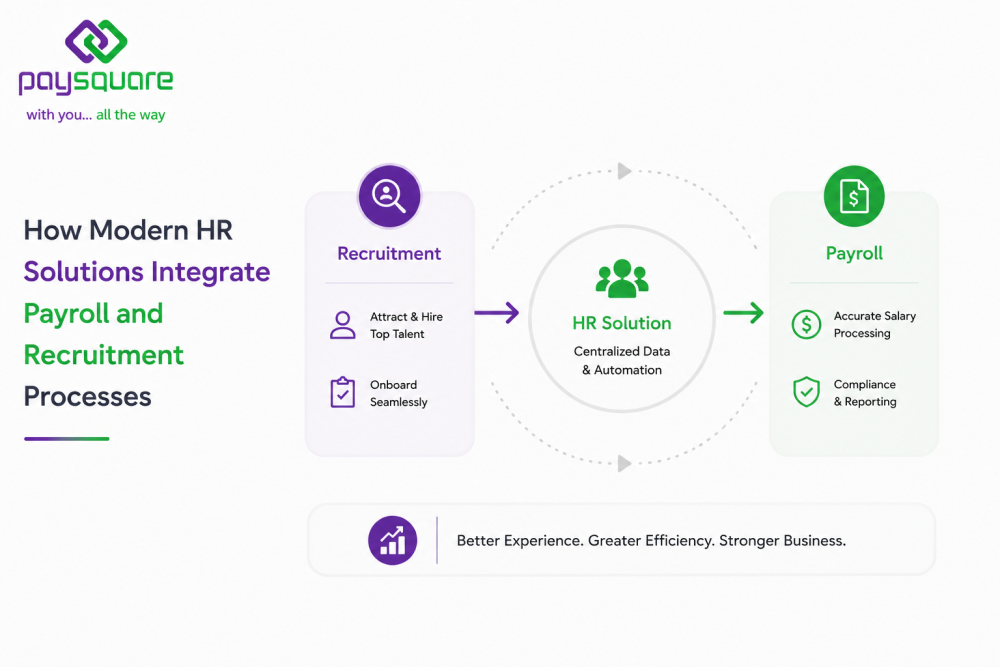
Integrating the recruitment and payroll processes removes the duplication, where information is captured once and flows straight through to pay.
What It Actually Means to Connect Recruitment and Payroll
The details a candidate hands over during hiring include their legal name, date of birth, PAN, Aadhaar, bank account, and declared previous salary, are the same details payroll needs to pay them and file their statutory dues.
In a connected setup, that information is collected once, at the application or offer stage, and carried forward through onboarding into the payroll system.
So an applicant tracking system feeds the onboarding workflow, onboarding feeds the master employee record, and that record feeds salary processing, PF, ESI, and TDS.
Where the Disconnect Drains Time and Money
Most growing companies don’t start integrated. They buy a recruitment tool first, and add a payroll vendor later, which can make things disconnected. The cracks show up in predictable places:
- The first paycheck. A joiner’s salary structure gets misread from an offer letter PDF, basic pay is entered wrong, and the entire PF and gratuity base is off from month one. Fixing it later means revised challans and an awkward conversation.
- Statutory registration lag. EPFO requires a UAN. ESIC needs the employee enrolled before contributions begin. When recruitment data doesn’t auto-flow, these registrations slip past their windows, and the company incurs interest at 12% per annum on late deposits.
- Audit trails full of holes. When HR rekeys data into payroll manually, there’s no clean record of who changed what. During a PF inspection, that missing trail is what turns a routine check into a problem.
How Modern HR Solutions Tie the Two Together
Outsourcing partners should treat recruitment and payroll as two ends of a single employee lifecycle rather than as separate functions. In practice, a few mechanisms make this possible:
- Candidate data captured during hiring populates the payroll master directly, so the bank account verified at onboarding is the same one into which the salary is credited.
- Salary structures are defined at the offer stage with statutory components already mapped, allowing PF, ESI, professional tax, and TDS to be calculated correctly from the first cycle rather than retrofitted later.
- Document collection, including Form 11 for PF, the previous Form 16, and identity proofs, takes place within onboarding, so payroll is never held up waiting on paperwork that recruitment could have gathered in advance.
This is also where the new Labour Codes become relevant. Since the four codes came into effect on 21 November 2025, the definition of “wages” has tightened. Basic pay must now generally constitute at least half of total remuneration, which directly affects PF and gratuity calculations.
A connected system applies that structure correctly at the point of hiring, rather than requiring payroll to recompute it for every employee after the fact.
Integrated vs. Disconnected: A Clear Comparison
| Aspect | Disconnected setup | Integrated HR solutions |
| Data entry | Same details keyed two or three times. | Captured once at hiring and reused. |
| First-month accuracy | Frequent errors in pay and deductions. | Salary and statutory dues are correct from cycle one. |
| Statutory compliance | PF and ESI registration often lags behind onboarding. | UAN and ESIC enrollment are triggered automatically. |
| Audit readiness | Manual records with gaps in the trail. | Timestamped, traceable changes. |
| HR effort | Reconciliation in every payroll run. | Exception handling only. |
What HR Teams Stand to Gain
The genuine return is not the technology itself but the hours HR no longer spends on reconciliation. When recruitment and payroll draw on a single record, the monthly cycle becomes a matter of reviewing exceptions rather than rebuilding data. Time once absorbed by spreadsheet checks can be redirected toward workforce planning, retention, and the strategic responsibilities the function is meant to deliver.
For finance leaders, the advantage lies in forecasts that hold. Headcount costs, statutory liabilities, and gratuity accruals all trace back to accurate source data, so the figures presented to the board match those in the system.
Paysquare connects the recruitment-to-payroll handoff with compliance-first processing, so your new joiners are paid accurately and on time from their very first cycle.
FAQs
1) What does it mean to integrate payroll and recruitment processes?
It means the data collected while hiring someone flows directly into onboarding and payroll, so a single employee record supports everything from the offer letter to the salary credit and statutory filings.
2) How do modern HR solutions streamline recruitment and payroll management?
They eliminate duplicate data entry by carrying candidate information through one connected workflow, which reduces errors and allows HR to manage only the exceptions rather than rebuilding records each cycle.
3) Why is payroll integration important during employee onboarding?
Onboarding is when PF, ESI, and TDS details are first captured, so moving that data into payroll cleanly ensures the first salary and statutory deductions are correct rather than requiring corrections later.
4) Can integrated HR solutions help improve payroll accuracy?
Yes. When salary structures and bank details are entered once and verified at hiring, the most common sources of payroll error are removed before the monthly run begins.
5) How does payroll integration help HR teams save time?
By eliminating re-keying and reconciliation, it converts a multi-day monthly exercise into a short review, freeing HR to focus on people rather than paperwork.


