Payroll has always been a cornerstone of business operations. But while the concept of paying employees remains the same, the tools and systems involved have undergone a massive transformation. From manual ledgers and paper checks to cloud-based software and AI-driven platforms, the payroll processing evolution has reshaped how companies manage employee compensation.
The Early Days of Payroll
In the past, payroll processing was a manual task handled by the HR department using pen and paper, spreadsheets, and handwritten checks. Employers had to calculate hours worked, deduct taxes, issue payments, and maintain physical records—all by hand. This process was not only time-consuming but also prone to human error. Today, many businesses rely on payroll service providers to simplify and streamline these operations.
During its early days, payroll processing was limited since it only concentrated on timely delivery of payroll but not integration with other HR or finance systems. It gave little or no room for scalability or real-time reporting.
The Payroll Processing Evolution
The era of automated processing found its awakening with the dawn of computers and spreadsheets. Calculations became faster and somewhat more accurate but did not really give birth to processing evolution until cloud, automation, and artificial intelligence entered the fray of payroll processing.
That shift changed the payroll function from a reactive to a strategic, data-driven function performed in a back office. Today, payroll can be managed from a single platform to accommodate many locations, complex tax codes, and various pay structures. Speed, precision, and safety in processing have increased to record heights in payroll as a consequence of these evolutionary changes in payroll processing.
Rise of Modern Payroll Technology
New payroll technology has entered a new era with precision and convenience by implementing software-as-a-service (SaaS) solutions instead of bulky hardware or having an on-site server. Cloud payroll is real-time access and updates for organizations without the tedious job of payroll activities.
Highlights of the modern payroll technology consist of the following:
- Automated tax
- Direct deposit integration
- Employee self-service platforms
- Cloud data storage
- Compliance alerts
- Integration with HR and accounting systems.
These tools have removed redundancy and human errors in the process and have made a seamless payroll experience.
The Role of Technology in Payroll Management
Technology has become more integral in payroll management functions than just cutting paychecks. Nowadays, it extends to compliance, analytics, reporting, and employee engagement. It now allows employers to automate tax filing and creation of W-2s. Immediately identify anomalies in payroll data. Offer on-demand payment options. Integrate their time-tracking solutions into the payroll operations.
Last but not least, keep up with all ever-changing labour laws in real time. It has moved beyond just the cutting of paychecks and administrative tasks and has turned payroll into a strategic functional partner in business decision-making. When the payroll system is a partner instead of an administrator, it frees up HR teams to focus on growth and employee well-being.
Benefits of Automated Payroll Processing
One benefit of digital transformation seen as most prominent is the automated processing of payrolls. Automation reduces manual entries, removes repetitive tasks, and checks the accuracy of calculations in terms of compliance.
The top positives of automated payroll processing are as follows:
- Time Efficacy—Automation handles repetitive tasks that normally take hours a week for HR teams.
- Accuracy—The absence of any manual entry is the greatest way for a system to reduce errors, and these errors might be tax calculations, deductions, or bonuses.
- Compliance—Tax laws and labour regulations are subject to changes, and the automated systems take care of these updates so the businesses remain compliant.
- A happy employee—Employees appreciate being paid on time and correctly. This fosters trust and elevates employee morale.
Challenges of Modern Payroll Processing
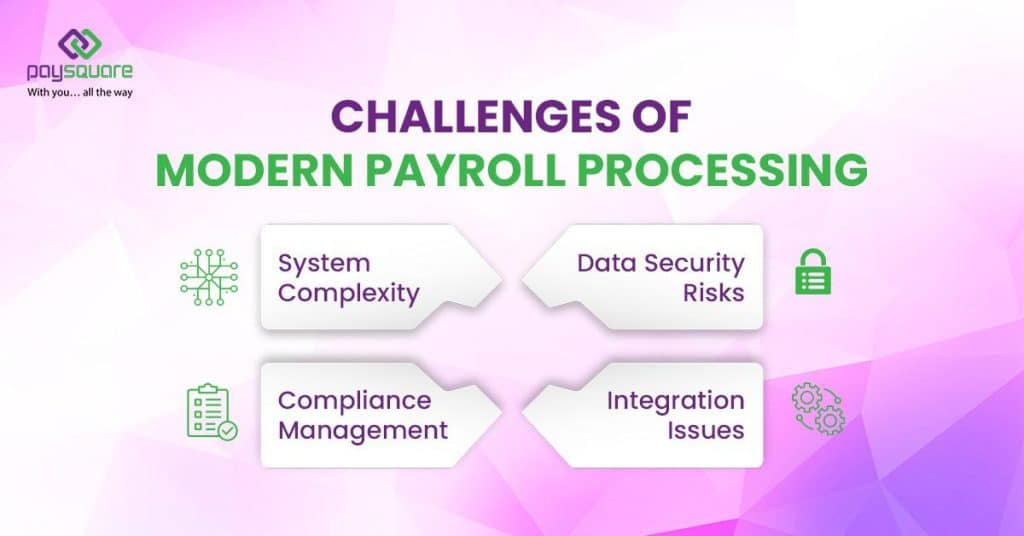
Despite the advancements, the journey hasn't been entirely smooth. There are still challenges of modern payroll processing that companies must navigate.
1. System Complexity
With so many features and integrations, some software can be overwhelming for users without technical expertise.
2. Data Security Risks
Storing sensitive payroll data in the cloud poses security challenges. Cybersecurity measures must be top-notch.
3. Compliance Management
Even with automation, businesses operating across different regions must carefully manage local tax laws and labour compliance. Misinterpretation can lead to hefty fines.
4. Integration Issues
Sometimes, payroll systems don’t integrate seamlessly with HR, accounting, or time-tracking software, leading to data silos and inefficiencies.
These challenges of modern payroll processing require businesses to choose vendors and systems wisely, invest in user training, and ensure data security protocols are in place.
Real-World Examples of Payroll Tech in Action
Many companies have successfully embraced technology to modernize their payroll:
- Startups use lightweight, cloud-based tools that scale as they grow.
- Global companies rely on unified platforms that support multi-currency and international compliance.
- Remote teams benefit from self-service portals where employees can view payslips, tax documents, and leave balances.
In all cases, the goal is the same: smoother, faster, and more compliant payroll operations.
What’s Next for Payroll Technology?
In the future, payroll processing will most likely evolve through further automation and AI technology, as well as predictive analytics. Here are some trends emerging in this field: AI-powered payroll assistants, which are chatbots that would help employees with their payroll-related queries in real-time, would be of immense use.
- Predictive payroll analytics: Forecasting tools for labour costs, their turnover, and payroll budgeting requirements are all specified in this description.
- Blockchain-The Payroll: A secure, transparent way to manage international payments and reduce fraud.
These trends indicate that payroll will undergo continued evolution; the process is accelerating, not slowing down.
Conclusion
The advances in technology have completely transformed payroll into something unrecognisable. From manual data entry to AI-based systems, the payroll processing revolution is like the other processes that testify to the trend towards automation and digital integration.
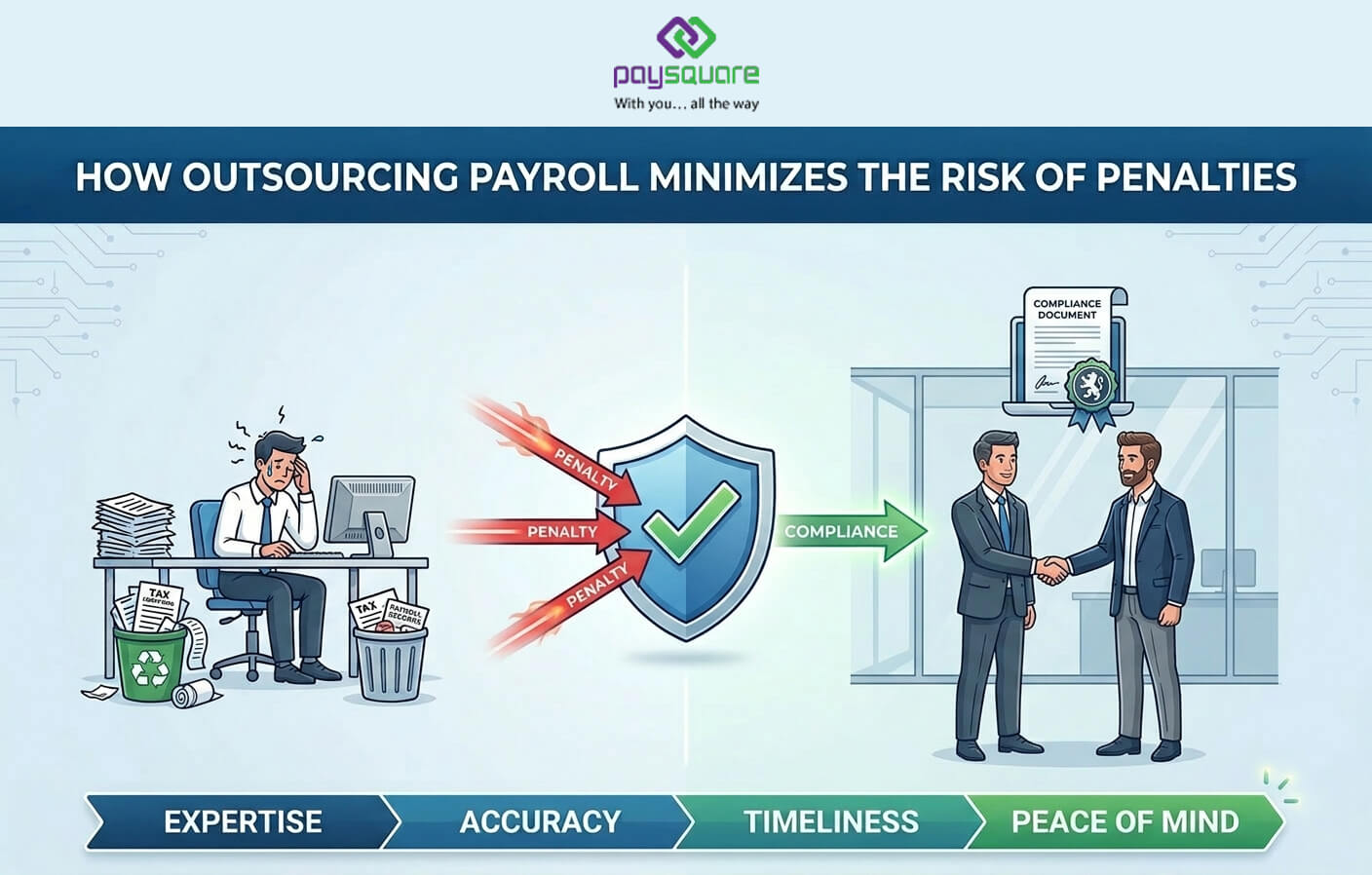
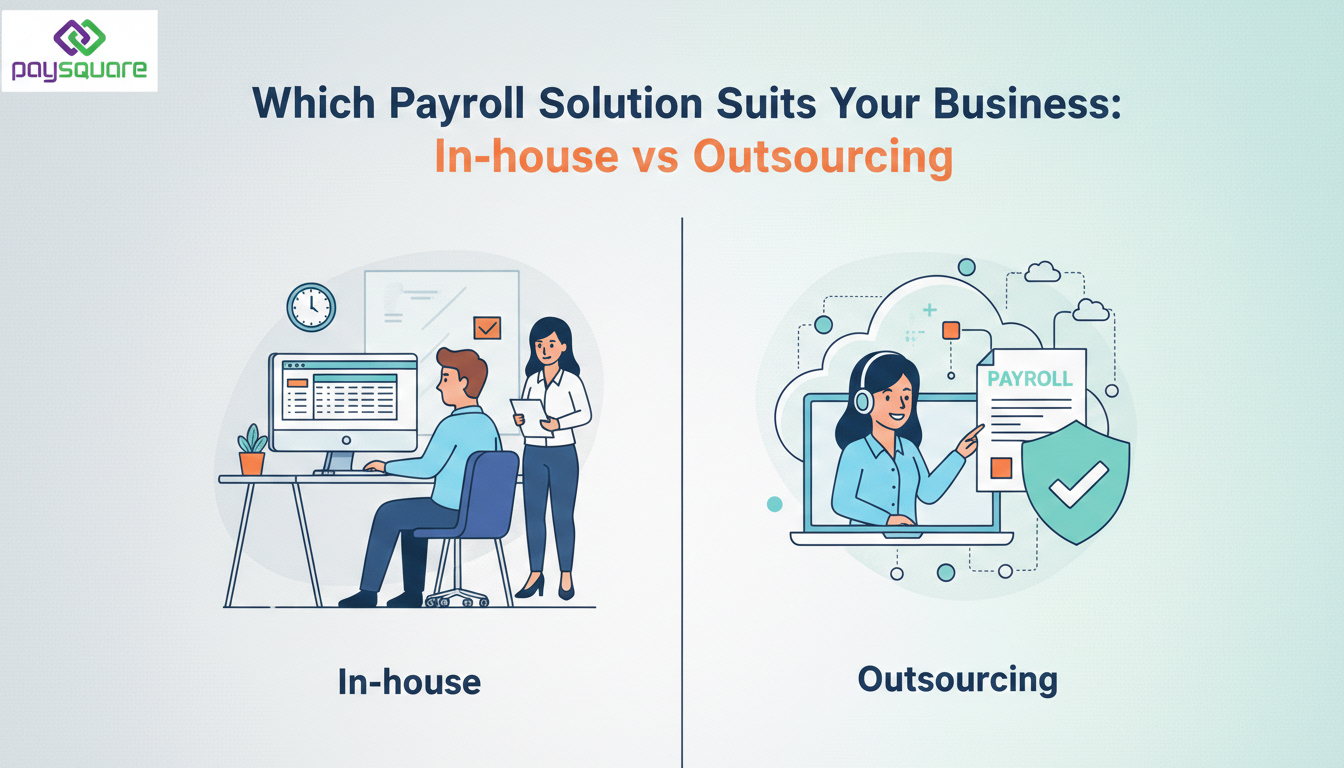
Modern payroll technology enhances HR operations with greater speed, accuracy, and compliance. While advancements in technology continue to reshape payroll management, businesses must stay aware of the challenges that come with it. This is where Outsourcing Payroll services can offer a strategic advantage.
Has automated payroll become a necessary requisite or has it become such a tactical entry into building a strong business for future scalability and resilience? As technology continues to evolve, payroll systems become increasingly integrated, intelligent, and indispensable.