In today’s dynamic workforce, businesses are no longer confined to hiring only full-time employees. The rise of the gig economy and remote work has led to a surge in freelance engagements. While this flexibility is great for both companies and workers, it introduces complexity into one important area: payroll processing.
To stay compliant and efficient, companies must understand the key differences in payroll processing between freelancers and employees. In this blog, we’ll explore those differences in detail, dive into the challenges in managing payroll for freelancers vs. employees, and offer best practices to streamline payments for both groups.
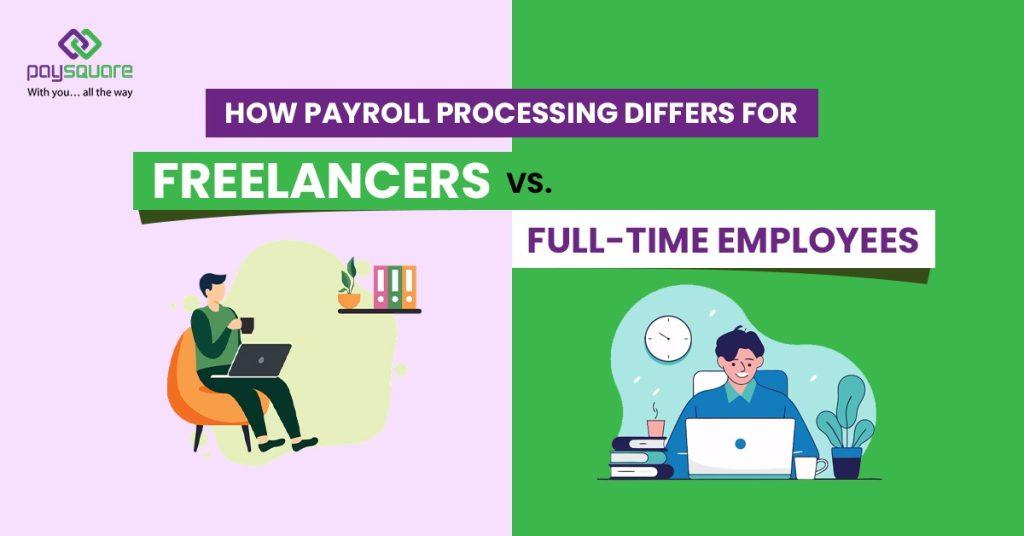
Understanding the Basics: Freelancers vs. Full-Time Employees
Before one can proceed to the groundwork or mechanics of payroll processing, it is quite necessary to define who really qualifies as a freelancer and who is a full-time employee.
Freelancers are those individuals who are self-employed to offer their services to various clients on the basis of the contract and who have to make their own payments of taxes and prepare their invoices for hours worked or for projects executed.
In contrast, a full-time employee is someone directly associated with an organization’s regular payroll—where taxes are withheld, benefits are provided, and labour laws are applicable. Access to systems like Paysquare login often simplifies payroll and compliance management for such employees.
It is this basic distinction that has a great impact on determining how the payroll is managed.
Full-Time Employee Payroll: Structure and Compliance
Full-time employee payroll is a structured process involving multiple mandatory steps. Businesses are responsible for:
- Deducting income tax, social security, and other withholdings
- Contributing to benefits like health insurance and retirement plans
- Complying with labour laws, such as minimum wage, overtime, and paid leave
- Filing monthly and annual tax reports
Because full-time employee payroll is strictly regulated, businesses often use automated payroll software to stay compliant and avoid penalties.
Freelance Payroll: Flexibility with Responsibility
When working with freelancers, companies are not obligated to withhold taxes or provide benefits. Instead, the freelancer issues an invoice, and the business pays the agreed-upon amount—typically via bank transfer, PayPal, or another digital platform.
This process is simpler but comes with its own risks. Since the company doesn't withhold taxes, freelancers must handle their own tax filings. That means understanding payroll processing for freelance and full-time roles is crucial for preventing misclassification and legal issues.
Key Differences in Payroll Processing Between Freelancers and Employees
There are several key differences in payroll processing between freelancers and employees, and understanding these can save a business time, money, and legal trouble.
1. Tax Handling:
- Employees: The employer withholds and pays taxes.
- Freelancers: The individual handles their taxes.
2. Payment Schedule:
- Employees: Paid on a set schedule (e.g., bi-weekly, monthly).
- Freelancers: Paid upon invoice approval, which can vary by contract.
3. Benefits:
- Employees: Often receive health insurance, bonuses, and paid time off.
- Freelancers: Do not receive benefits from clients.
4. Documentation:
- Employees: Employers file employment forms like W-2 (in the U.S.).
- Freelancers: Clients may issue a 1099 or equivalent, depending on local regulations.
These differences in payroll processing require separate workflows and clear internal policies.
Challenges in Managing Payroll for Freelancers vs. Employees
Flexibility is an advantage; however, several hurdles are faced by companies in managing payroll for freelancers versus employees:
- Classification Risk: Misclassifying a freelancer for an employee (or vice versa) could mean large fines and legal troubles.
- Unpredictable Invoice Submissions: Freelancers may submit invoices on different schedules, complicating budgeting and cash flow management.
- Compliance Differences: Employee payroll must comply with labour acts and regulations, whereas payment to a freelancer depends on the contract terms.
These challenges call for systems that adequately maintain payroll processing for both groups.
Best Practices for Managing Payroll Across Both Roles
Some practices are fundamental to properly handling differences in payroll processing. The following pertains to the best practices indicated:
1. Use Separate Systems or Modules
Choose payroll systems that provide separate workflows for freelancers and full-timers. This will help avert confusion and guarantee accurate processing.
2. Create Clear Contracts
Always make written agreements with freelancers that specify payment terms, deliverables, and timeframes. This is a way to promote accountability and smooth transactions.
3. Automate Where Possible
Use automation as much as possible for easier processing of tax calculations, benefits contributions, or even invoice approvals. This way, errors are reduced, and processing is made that much faster for both parties.
4. Keep in Touch with Regulatory Requirements
Regulatory requirements can vary from one country to the next or between states. Make sure that labour laws and taxation policies are periodically reviewed with a view to understanding how they impact the processing of payroll for freelance roles and full-time roles.
Conclusion
Understanding the key differences between payroll processing for freelancers and employees is crucial for navigating the landscape of remote work, the gig economy, and diverse employment models. While payroll for full-time staff follows a structured, compliance-driven process, managing freelance payments demands flexibility, thorough documentation, and clear communication—making professional payroll management services invaluable.
If your enterprise were to navigate the payroll difficulties of freelancers vs. employees while ensuring that it complies with industry best practices, your firms stand a chance of remaining compliant, efficient, and scalable.
All in all, knowing payroll processing for freelance and full-time roles is not just about compliance; it's about creating a seamless and fair financial experience for everyone on the team.