In today’s competitive job market, offering attractive employee benefits is more than a nice-to-have—it’s a strategic necessity. However, while benefits improve retention, satisfaction, and productivity, they also come with a financial impact. Understanding the impact of employee benefits on your business’s finances is essential for sustainable growth and effective payroll management.
What Are Employee Benefits?
Employee benefits go beyond salaries. They include:
- Health insurance
- Paid time off
- Stock options
- Education
- reimbursements
- Childcare assistance
While these perks enhance your company’s appeal, they also add to the total compensation package—directly impacting payroll cost calculations, making Payroll Outsourcing Solutions even more valuable.
Payroll Cost Calculation: The Full Picture
To understand how much your workforce really costs, you must master payroll cost calculation. Here's a basic formula:
Total Payroll Cost = Gross Wages + Employer Taxes + Benefits + Overhead (admin & compliance)
For each employee, this calculation provides insight into the real budget required to sustain the role. Employers who neglect to calculate the full cost—including benefits—may underbudget and strain their cash flow.
Ways to Reduce Payroll Costs with Benefits
It's true, that benefits aren't cheap, but they will provide a bastion to savings when applied wisely. Good ways to lessen payroll using benefits include the following:
1. Wellness Programs.
Healthy employees reduce the number of sick days taken off from work and lower the number of health-related claims. Providing wellness initiatives can further reduce long-term premiums for health care.
2. Employee-Paid Benefits
These are employee-paid benefits such as vision insurance and legal assistance, whereby the business can offer more without paying for it.
3. Flexible Work Space
Introducing work-from-home practices or flexible hours might mean lower overhead, which you might want to instead use for essential benefits rather than rent and lease-related costs.
4. Group Insurance
You can arrange the group rates for an insurance policy. The pooling of larger groups of employees into one plan can bring per-employee costs down. Aligning benefits around employee needs and business goals increases satisfaction without necessarily incurring many payroll costs.
How to Balance Employee Benefits and Payroll
Paying attention to payroll and benefits for the employee is one of the great dilemmas of small to medium-sized businesses. Here is how to go about it wisely:
1. Initiate a Budget on Benefits
You can fix a specific percentage of your payroll to be allocated for this purpose. Typical high 20s or low 30s. And then, you will have scarce financial constraints while standing enough room to offer competitive packages.
2. Survey Employees
Look at things that matter for which your team candidates deserve recognition in your internal benefit offerings. You don't need to offer
the whole nine yards of perks no one uses.
3. Scale with Growth
Basic kind of employee benefits may include covering some or all of health insurance and paid time off. Like any other business, however, as you grow, consider long-term perks such as retirement benefits or sabbatical.
Leave aside all these specificities related to employees, like applying for retirement or sabbatical leave. Balancing is only to attract talent and retain it without shelling out too much cost or endangering company stability.
[caption id="attachment_27953" align="alignnone" width="1024"]
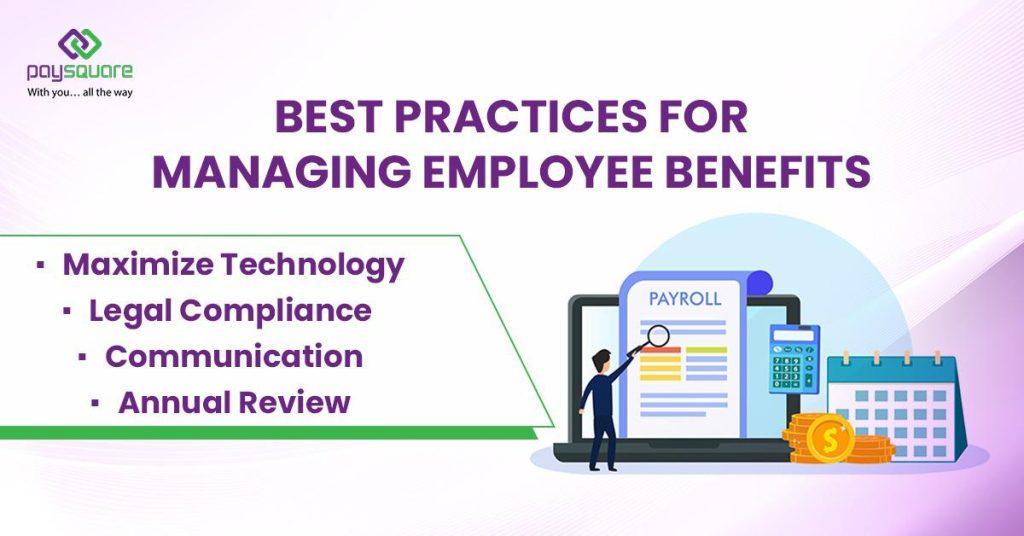
Best Practices for Managing Employee Benefits
Efficient and compliant payroll management involves more than just writing checks. Here are the best practices for managing employee benefits:
1. Maximize Technology
The use of HR and payroll software has automated the benefit tracking, open enrollment and deduction processes. This eliminates errors and also saves time.
2. Legal Compliance
Benefit programs must be compliant with labour laws and tax codes in localities. Non-compliance results in penalties or legal action.
3. Communication
Communicate relevant information regarding the benefits with employees. Employees who appreciate the value of benefits are likely to see the investment you make in them.
4. Annual Review
Reassess benefits every year based on employee inputs, market trends, and the business's financial health. When benefits are well managed, they can actually boost morale and productivity without creating the hassles of payroll.
The Bigger Picture: Employee Satisfaction and ROI
Beyond numbers, benefits drive value in many intangible ways:
- Attraction and retention: Top talent is drawn to companies with solid benefit offerings.
- Loyalty and engagement: Employees who feel cared for are more likely to stay and perform better.
- Reduced turnover: Replacing an employee can cost up to 33% of their annual salary. Good benefits reduce that risk.
So while benefits do increase payroll costs, they also provide a strong return on investment when managed thoughtfully.
Conclusion
Employee benefits affect payroll, but that doesn't mean it has to be a burden. Strategic thinking on the benefits can actually improve the workforce while efficiently controlling payroll spending on them. From precise payroll costing to practical ways of payroll cost reductions through benefits, today's leaders must think holistically about the entire structure of salaries and incentives in organizations.
If you follow best practices in employee benefits management, use technology effectively, and know how to balance employee benefits against payroll, you may still maintain a healthy economy without bringing discomfort to a happy and loyal team.
Smart payroll management services is not cutting costs but spending wisely on people powering your business.