Payroll compliance is a critical aspect of business operations. Whether you're a small business owner or managing a large organization, understanding and adhering to payroll compliance laws is essential. Non-compliance can lead to legal penalties, fines, and damage to your company's reputation.
How to Ensure Payroll Compliance for Small Businesses
Payroll compliance refers to following legal regulations while managing employee wages and deductions. For small businesses, payroll compliance can seem overwhelming, but breaking it down into smaller steps can make it more manageable. Here’s how to ensure payroll compliance for small businesses
Comprehend the taxation and labor laws of India:
Businesses must follow various laws for payroll compliance, including the Income Tax Act, the Provident Fund Act, the Employee State Insurance Act, and the Professional Tax Act, among others. It is essential to keep abreast of these laws to ensure that you calculate and deduct the right amounts as regards tax, PF, ESI, and other benefits.
Enter the Restriction on Statutory Deductions:
Before including any deduction from the wages of an employee, a business has to register with the Employee Provident Fund (EPF) organization, Employee State Insurance (ESI), and state authorities (for professional tax local to them). "Remember to complete these registrations before you start deducting the respective amounts from your employees' wages.
Implementing an Appropriate Payroll System:
Establish a payroll system that will ensure correct computation of taxes, statutory deductions, and timely payments. Payroll software can help automate these calculations and can reduce the risks of human errors. Such systems could greatly improve payroll compliance for a small business.
Maintain Accurate Records:
Having complete records is important for a payroll compliance audit. You don't want to rely on employees alone to chase them down for all records. Keeping records will include all salaries, deductions, and tax payments paid by employees. Once records are regularly updated, there can be a quick response to any audit or legal question linked to payroll.
Salaries to be Remitted in Time:
Ensure that all dues related to payroll, such as PF, ESI, and taxes, are repaid at the right time. Late payments can also attract penalties. Included in this are your processes for filing your Income Tax (TDS) returns and making monthly deposits for PF and ESI.
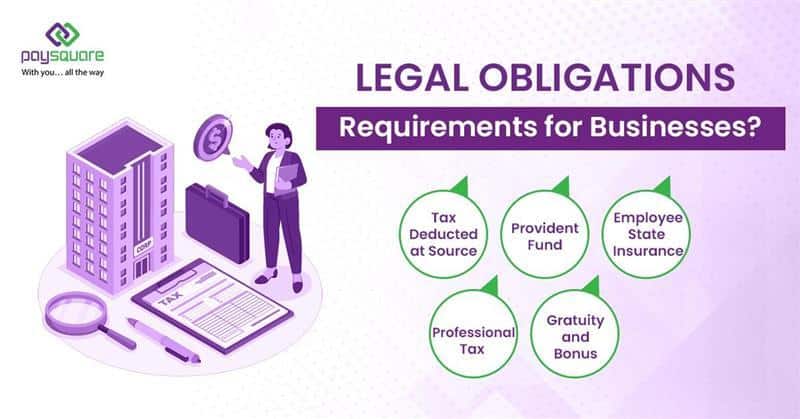
Legal Obligations for Payroll Compliance in Business
When it comes to payroll, businesses have specific legal obligations to ensure employees are paid fairly and according to the law. Let's review the key legal obligations for payroll compliance in businesses:
1. Tax Deducted at Source
Employers must deduct TDS from employees’ salaries every month under the Income Tax Act, based on the applicable tax slabs, and deposit the deducted amount with the government.
2. Provident Fund
Employees contribute to the provident fund at the rate of 12% of their basic salary plus dearness allowance, and the employer matches this. The Employees' Provident Fund Organisation (EPFO) manages the Provident Fund, which primarily serves as a pension and retirement savings fund.
3. Employee State Insurance
Employee State Insurance is a health insurance scheme for employees whose monthly earnings are below ₹21,000. The employer contributes 3.25% of the employee's wages, while the employee contributes 0.75%.
4. Professional Tax
Only a few states levy professional tax, and employers deduct it from employees' accounts. Each state notifies the amount, and employers usually deduct it monthly. The employer makes the deposit of PT with the local municipal body.
5. Gratuity and Bonus
The company must pay gratuity to employees who complete five years of service, as per the Payment of Gratuity Act, and provide an annual bonus if their salary falls within the limit specified under the Payment of Bonus Act.
Key Payroll Compliance Requirements for Companies
Every company, large or small, must follow certain key payroll compliance requirements to ensure legal adherence. These requirements are designed to protect employees and ensure fairness in salary payments. Some of the Key payroll compliance requirements for companies:
1. Accurate Salary Calculation
The first step for salary compliance is accurate salary computation. Calculate all components accurately—basic salary, allowances (like HRA, special allowances, etc.), overtime pay, and bonuses—as a single figure in the salary.
2. Continuous Contribution to PF & ESI
Employers must contribute to PF and ESI by law. They should also remit their contributions on time to prevent heavy penalties.
3. Maintain Employee Records
Companies must maintain comprehensive records of their employees' compensation, tax deductions, and statutory contributions. These records should include:
- Employee personal details
- Salary details (monthly/annually)
- Tax deduction details
- Statutory deductions (PF, ESI, PT, etc.)
- Payment history for bonus and gratuity
4. Comply with Wage Laws
Indian labor laws mandate a minimum wage for employees based on industry standards and state laws. Employers must ensure that their employees’ salaries are in line with these standards.
5. Ensure Timely Filing of Returns
Companies must file various returns, such as Income Tax (TDS) returns, Provident Fund returns, and ESI returns, on time. These must be filed annually or quarterly, depending on the type of return.
FAQs
1. What payroll compliance means and why it is important for businesses?
Payroll compliance refers to abiding by the laws and regulations concerning salaries, taxes, and benefits for employees. It means correctly paying employees and withholding necessary statutory deductions while keeping the company within the bounds of the law, thus avoiding penalties and fines.
2. What will small businesses do to ensure payroll compliance?
Small businesses ensure payroll compliance by learning and understanding the relevant tax laws, registering for statutory deductions such as PF and ESI, setting up a means for payroll, maintaining proper records and making timely payments of taxes and others dues.
3. What payroll taxes are therefore relevant for companies?
TDS (Tax Deducted at Source), PF (Provident Fund) contributions, ESI (Employee State Insurance), and PT (Professional Tax) are the most important payroll taxes. The tax has to be deducted and paid on time so that companies remain compliant to laws.
4. What happens if a company breaks payroll laws?
Failure to comply with payroll laws may expose the company to penalties, legal actions, and fraudulent damage. Moreover, other requirements include restoring financial damages associated with past-due income taxes, penalties, and interest payments.
5. Are all companies required to contribute to Provident Fund (PF) and ESI?
No, not all companies require contributions to Provident Fund (PF) and Employee State Insurance (ESI). PF applies to those firms having more than 20 employees. ESI applies only to those employees earning less than ₹21,000 per month and is mandatory for companies working in specific sectors.
Conclusion
For a lawful operation and legal safety, it is necessary to know and comply with the legal payroll compliance requirements for businesses. As an employer, you must meet all compliance requirements to protect yourself from penalties and ensure your employees receive their rightful pay properly and honestly.
If you take the steps mentioned above, payroll compliance can be easy to administer, and you can get back to focusing on growing your business in compliance with the law.