Introduction Hr Tech Integration
In the case of managing payroll, benefits, and employee data, challenges often arise when using isolated systems. Errors, inefficiencies, and compliance risks will then begin to impact the operation negatively due to inconsistent processes. For HR managers and payroll professionals, juggling complex labor laws, employee benefits, and payroll accuracy can seem like an uphill battle.
A Deloitte study found that 75% of companies say that their HR processes are not integrated at all, which causes inefficiency and errors. Another survey by Deloitte says that 74% of organizations consider digital HR tools critical to streamlining operations. HR tech integration can solve this chaos.
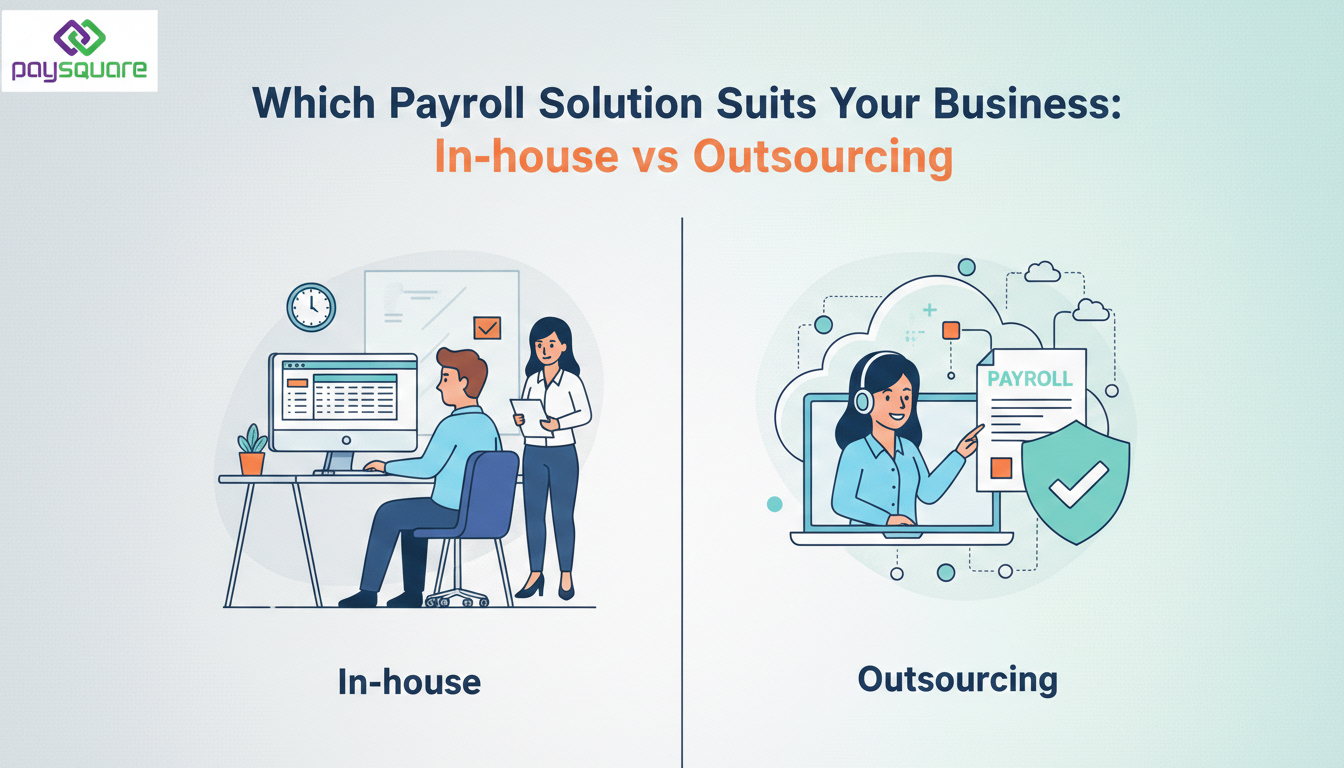
Modern businesses increasingly rely on payroll outsourcing companies to streamline their HR operations. Connecting payroll services, employee management, and benefits in a unified system will help businesses be efficient, accurate, and at peace.
In conjunction with outsourcing payroll services, this integration can make businesses perform tasks without a hitch while keeping focus on the core operations.
The Complexity of Payroll, Benefits, and Employee Management in Modern Businesses
1. Payroll Management Challenges
Managing payroll for an evolving workforce is a headache in itself. From computing salaries to calculating overtime, and also on the tax deductions and fringe benefits, manual processes increase errors. According to the American Payroll Association, an error in payroll costs business about $3,500 a year for every 100 employees. For emerging businesses, the payroll issues tend to multiply with each employee hire or market expansion. Without a payroll agency, companies risk payroll inaccuracies and compliance errors.
2. Compliance Risks
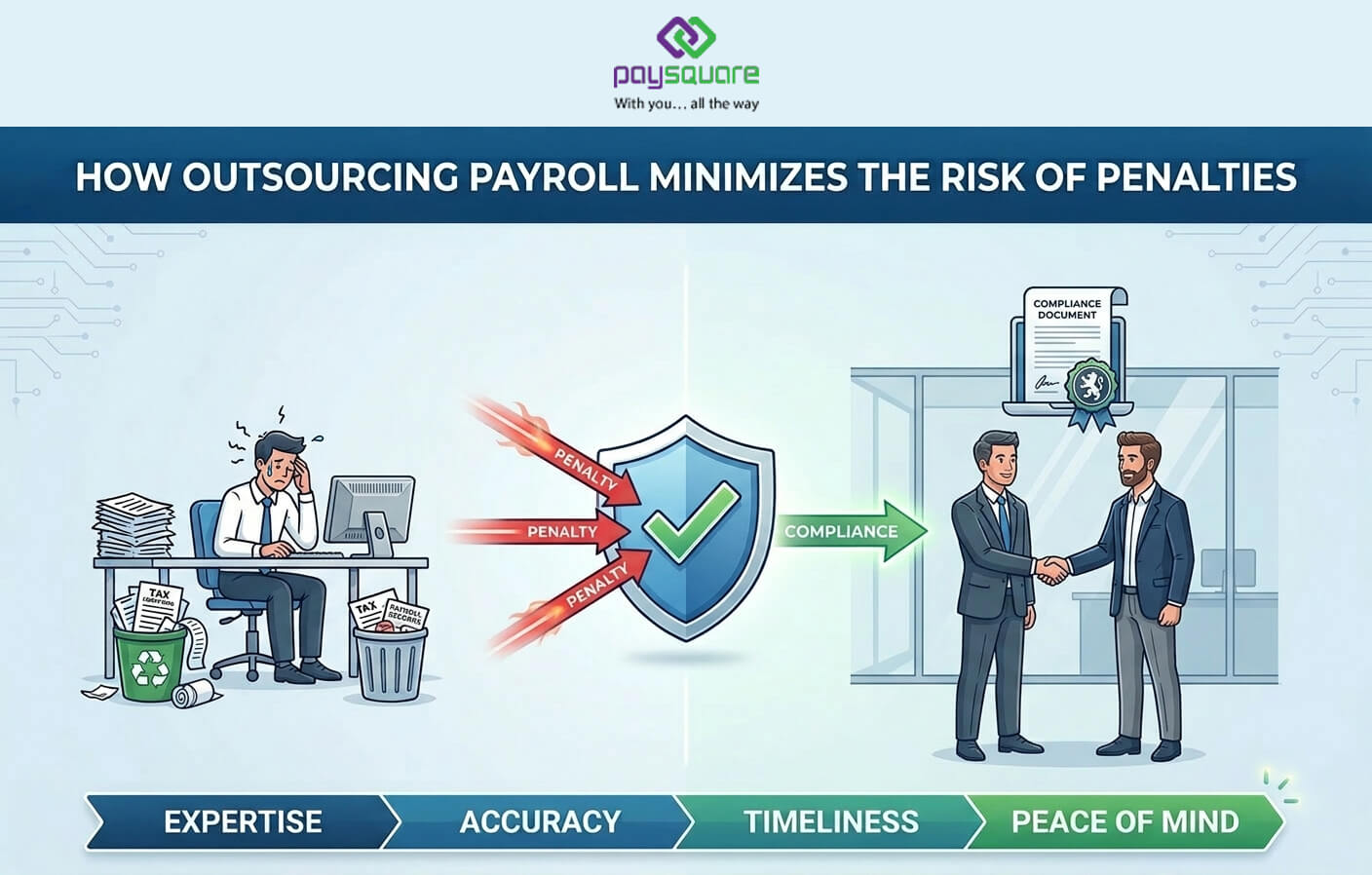
According to Ernst & Young, 47% of businesses experience compliance penalties resulting from payroll processing errors. Mistakes in payroll can lead to hefty penalties in terms of labor law non-compliance. Trying to navigate tax codes, statutory benefits, and regional regulations without proper expertise is risky, especially for companies with fewer resources.
3. Manual Processes
Manually managing all employee benefits, including health care, pensions, and leave policies, is quite inefficient and error-prone. According to the Workforce Institute at UKG, 54% of employees experience payroll-related errors, which brings down their satisfaction and productivity levels. Without automation, high administrative burdens lead to low satisfaction among employees and wasted time. Payroll management services help businesses avoid the pitfalls of manual payroll processing.
4. Fragmented Systems
Kronos research stated that it is approximated that businesses spend approximately 40% of HR staff time on administrative tasks, like payroll and benefits management. All payroll, attendance, and employee data are kept on separate platforms, hence it becomes difficult to carry out any kind of consistency in accuracy. This can lead to payroll delays and dissatisfied employees.
Addressing the challenges would, therefore unlock better employee experiences while maintaining compliance and operational efficiency.
How HR Tech Integration Bridges the Gap

1. Seamless Payroll Processing
Integrated systems use sophisticated payroll management services to calculate salaries, deductions, and payments automatically. Companies that employ integrated payroll systems have reduced their payroll processing time by 45%, G2 Research claims. Payroll outsourcing to companies specializing in payroll services is accurate and timely.
2. Unified Data
Consolidation of data in one platform reduces duplication and errors. Leading payroll companies provide tech-enabled solutions that consolidate payroll, attendance, and benefits data. According to research by PwC, the integration of HR platforms results in a reduction of data discrepancies by 38% and companies using integrated HR systems report a 33% increase in data accuracy and a 20% reduction in compliance errors.
Thus, the accuracy will improve. The payroll, attendance, and benefits data are interconnected, which smoothes out decision-making and reporting.
3. Compliance Made Easy
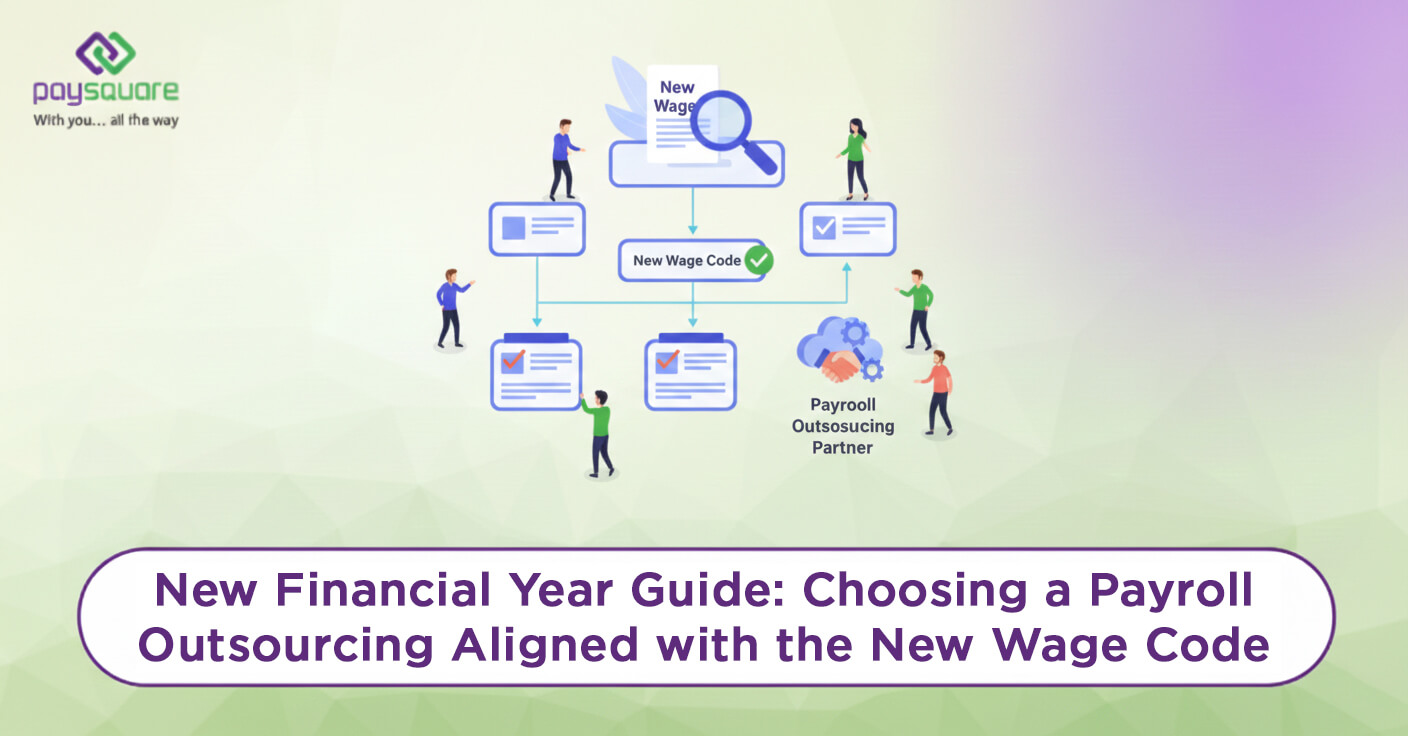
A Gartner survey indicates that organizations that use tech-based HR solutions are 35% more likely to be compliant in their payroll processes. Payroll service outsourcing guarantees strict compliance with country-specific and world tax legislation in order not to pay extra in the way of penalties. India based payroll outsourcing company specializes and helps to be clear-cut in Indian labors regulation issues.
4. Scalable Solutions
Payroll systems which come integrated are with them on their journey when a company grows, scaling becomes much easier, since an outsource payroll firm takes any size business or growth spurts as per need.
Advantages of Outsourcing Payroll in HR Tech Solutions
1. Cost Savings
Payroll outsourcing means less need for in-house teams and administrative overhead. The Global Payroll Management Institute also states that outsourcing payroll can bring down the administrative cost by 18%. Businesses that outsource payroll save an average of 18% annually in operational costs, EY says.
India based payroll outsourcing services offer economical, cost-effective solutions for businesses from all over the world. Payroll outsourcing companies in India offer cost-effective solutions according to businesses of all sizes.
2. Expertise and Compliance
Outsourced payroll companies provide payroll law expertise and compliance requirements. So, any legal risk will reduce, and accuracy will be ensured. Partnering with payroll companies in India lets businesses gain access to expert compliance management.
3. Focus on Core Business
Businesses free resources to strategic growth priorities, and payroll outsourcing service providers handle the time-consuming payroll procedures. Statista projected that the payroll outsourcing market is going to be worth $18.4 billion in 2025 due to high demand for efficient and accurate payroll solutions.
Outsourcing payroll frees up resources, allowing businesses to focus on their core operations.
4. Error Reduction
Outsourcing payroll services minimize payroll errors. In fact, the Everest Group postulates that outsourced payroll reduces errors by up to 80%. Payroll agency services use processes to minimize errors in calculations and in tax filing and benefits payouts.

The Future of HR Tech and Payroll Outsourcing
1. Automation and AI
Artificial Intelligence (AI) is revolutionizing payroll management services by automating routine tasks, including tax calculations and compliance checks. McKinsey projects that AI and automation in HR tech could save up to 90 hours per month in routine payroll tasks for mid-sized companies. The McKinsey report also confirmed AI-driven payroll systems can save businesses up to 25 hours per month in manual tasks. AI-driven insights also enable businesses to better predict their payroll expenses.
2. Cloud-Based HR Solutions
Cloud technology enables businesses to access the data of human resources and payroll from anywhere. In India, Payroll companies are increasingly offering cloud-based platforms for handling real-time, secured data. Research from SHRM shows that 67% of global organizations expect to implement cloud-based solutions in HR by 2025, aiming to increase scalability and flexibility.
3. Global Expansion
By 2025, 78 percent of businesses will adopt cloud-based payroll platforms, says Gartner. As businesses scale into the international market, local payroll experts ensure compliance with the respective country's labor laws while outsourcing payroll services. In India, payroll outsourcing companies, for example, become essential partners for global businesses seeking entry into the country.
Conclusion
Integrating HR technology with payroll outsourcing services is no longer a luxury but a necessity for modern businesses. Adopting payroll outsourcing companies ensures compliance, efficiency, and seamless HR operations. According to a Deloitte survey, 81% of companies that integrated HR technology with outsourced payroll reported improved compliance and employee satisfaction.
Companies can achieve greater efficiency, compliance, and employee satisfaction by uniting payroll, benefits, and employee management into one system. Forbes states that organizations with integrated HR and payroll systems see an improvement of 25% in employee satisfaction due to timely processing of benefits and error-free payroll.
Payroll outsourcing companies in India are revolutionizing the way payroll and HR processes are treated, with their expertise and cost-effective solutions. A reliable payroll agency can transform payroll management into a hassle-free experience. Investing in integrated HR and payroll solutions is an investment in smooth operations and a satisfied workforce.
Ready to bridge the gap between payroll, benefits, and employee management? Embrace HR tech integration today.