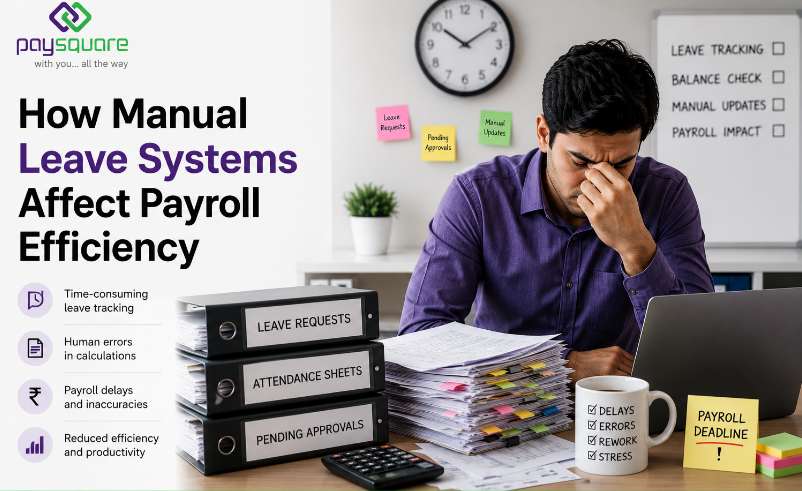
A manual leave system comes with plot holes that at least one HR manager has had to deal with. For example, a casual leave that wasn’t logged. A loss-of-pay day that someone forgot to flag, or a sick leave application sitting in someone’s email, never updated in the master Excel sheet.
By the time these gaps reach the payroll team, usually around the 25th of the month, when calculations begin, there’s no time to chase down the truth.
Why Manual Leave Systems Are Still So Common
Even in 2026, plenty of Indian businesses are running leave on spreadsheets, email threads, or basic forms. There’s usually a reasonable explanation. It worked when the team was 15 people. There isn’t a reason to invest in software, or the company grew faster than its systems did, and nobody had time to fix what wasn’t visibly broken.
The problem is, Indian leave policies aren’t uniform; they vary by state, by industry, and often by employment contract. You’re tracking:
- Casual leave, sick leave, and earned leave are under different accrual rules.
- Privileged or annual leave carrying over from the previous year.
- Maternity, paternity, and adoption leave.
- Compensatory time off against weekend work.
- Loss-of-pay (LOP) days that directly hit salary calculations.
- Sandwich leave rules where weekends get clubbed with applied leaves.
- State-specific public holidays that vary across offices.
Tracking all of this manually for even 20 employees is harder than it sounds., more the employees strength it becomes a near-impossible task to keep accurate.
Where the Cracks Show Up in Payroll
The connection between leave and payroll isn’t subtle. Every leave decision touches salary. And when leave data isn’t accurate, payroll can’t be either.
A few of the most common breakdowns:
1. LOP miscalculations.
A leave-without-pay day means the employee’s salary needs to be prorated. If LOP isn’t captured correctly, or worse, if it’s captured for someone who actually had leave balance, the wrong amount goes out. Reversals happen the next cycle, which creates its own mess.
2. Leave balance disputes.
When an employee says they have 8 earned leaves left and the spreadsheet says 5, who’s right? Without a system-tracked history, you’re relying on memory and email trails. These disputes always come up around year-end, when employees want to use what’s owed to them before it lapses.
3. Attendance and leave mismatches.
Someone is marked present in the attendance register but applied for leave that day. Or someone took leave, but it wasn’t deducted from the balance. These mismatches don’t always surface in the same month; sometimes they show up three months later, when reconciliation finally happens.
4. Statutory compliance gaps.
Manual leave records and unsynchronised LOP entries don’t just create payroll errors. When LOP affects gross salary, it affects PF, ESI, and TDS calculations downstream. A leave tracking error can quietly turn into a compliance issue without anyone realising.
The Hidden Cost of Manual Leave Tracking
There’s a real number attached to all this, even if it doesn’t show up as a line item.
Payroll executives running manual systems typically spend a significant amount of their time just reconciling leave and attendance data. That’s time not spent on tax planning, reporting, or strategic work. This inefficiency causes a lack of focus on things that are more important than just firefighting.
Then there are the indirect costs.
- Employee dissatisfaction when the payslips are wrong.
- Employees losing trust when leave balances seem arbitrary.
- Manager frustration when team planning depends on data that may or may not be accurate.
- And in worst cases, statutory penalties may be imposed when the miscalculated LOP leads to underpaid PF or ESI contributions.
How Manual Leave Systems Increase HR Workload
An integrated team ensures consistency in many ways because it eliminates human error and ensures accurate data by not having to:
- Chase managers for leave approval confirmations that never made it into the master sheet.
- Cross-check attendance registers against leave applications stored in three different formats.
- Manually calculate LOP days for each affected employee.
- Update year-to-date leave balances every month.
- Respond to employee queries about leave history that should be self-serve.
- Reconcile end-of-quarter and end-of-year leave encashment calculations.
None of this is strategic work. It’s administrative drag. And for HR teams already stretched thin, it’s the kind of workload that doesn’t leave room for the things that actually move the business forward, like focusing on engagement, hiring, learning, and improving culture.
Why Integrated Systems Solve the Problem
The fix isn’t complicated, but it does require commitment. An integrated leave and payroll system, either embedded in an HRMS or delivered through a payroll outsourcing services partner:
- Handles the reconciliation in real time.
- Leave applications flow into payroll automatically.
- Balances update without manual intervention.
- LOP days are flagged before salary processing begins.
The other piece that matters: audit trails. With manual systems, when something goes wrong, you can’t always trace back why. Integrated systems log every approval, every deduction, every adjustment. When questions come up, and they always do – there’s a clear record to point to.
Conclusion
Manual leave management isn’t free, even when it looks like it costs nothing. The errors it creates in payroll, the workload it adds to HR, the compliance risks it quietly introduces, these all show up eventually-usually at the worst possible time. That’s exactly where leave management services become essential, helping businesses avoid these hidden costs and inefficiencies.
For businesses that have crossed the point where spreadsheets stop being viable, Paysquare’s payroll services bring leave, attendance, and payroll into one integrated system. The kind of setup where the data is right the first time, the reconciliation happens automatically, and your HR team gets to focus on actual people work instead of chasing approvals.
FAQs
1. What is a manual leave management system?
A manual leave management system tracks employee leaves through spreadsheets, emails, or paper forms instead of automated software, often relying on individuals to update records, calculate balances, and feed data into payroll manually.
2. How do manual leave systems affect payroll efficiency?
They introduce delays and errors in payroll cycles because leave data has to be manually reconciled with attendance and salary calculations, leading to wrong LOP deductions, incorrect salary payouts, and time-consuming rework.
3. Why do manual leave records create payroll errors?
Because leave entries aren’t synced with payroll in real time, mismatches between applied leaves, attendance records, and salary calculations are common, and these errors often go undetected until employees raise concerns.
4. How do manual leave systems increase HR workload?
HR teams end up spending significant portions of every month reconciling leave data, chasing approvals, calculating LOP manually, and handling employee queries that an automated system would resolve through self-service.