Introduction of Payroll Outsourcing Services
Every business, big or small, incurs costs. There are many types of costs to the business, and one of them is the expenses incurred for/by the employees. These expenses are part of the payroll management service. These costs are incurred for different reasons and are generally on behalf of the company, such as traveling for business meetings, client management, training courses, mobile bills, house relocation for business, and more. These expenses incurred by the employees must be reimbursed.
Expenses and reimbursements are intricate parts of the payroll process that must be performed with care. Businesses should only use payroll outsourcing services to outsource expense and reimbursement management so their daily operations are not hampered and the payroll system remains free of errors.
Payroll companies are equipped with advanced software and technologies that allow them to easily keep track of the data regarding employee expenses and their reimbursement. Let's learn more about the efficient management and simplification of expenditure management and reimbursement that payroll outsourcing companies may provide.

The Role of Payroll Outsourcing Services
Payroll outsourcing services play a significant role in streamlining company expense management and reimbursement processes. There are numerous advantages for all organizations to use their services. A few of these advantages are listed below:
- Efficiency and Accuracy
Outsourcing payroll services significantly reduces the possibility of human error and systematizes the tracking and recording of costs. These services provide sophisticated tools for capturing, categorizing, and reporting expenses precisely. By integrating with other financial systems, the outsourced payroll providers ensure seamless data flow and real-time updates, which improves overall operational efficacy. This automation allows companies to place more emphasis on strategic activities rather than being bogged down by administrative tasks.
- Policy Compliance
Payroll outsourcing companies ensure stringent adherence to company policies by automatically abating non-compliant expenses and implementing guidelines consistently. These services are intended to incorporate company-specific expenditure regulations, ensuring that all claims adhere to the established standards. This cut down the administrative liability on managers and HR personnel, who no longer need to check each expense claim for compliance manually. Furthermore, the system provides a clear audit trail and simplifies the review and adjustment of policies as business needs evolve.
- Timely Reimbursements
Automated workflows facilitated by payroll outsourcing services accelerate the approval and reimbursement process. Employees receive their reimbursements faster, which lifts morale and maintains trust in the expense management system. Timely payments also help employees manage their finances better, reduce stress, and improve job satisfaction. Also, automated reminders and notifications confirm that managers approve expense claims promptly and prevent delays.
- Fraud Prevention
Third-party payroll companies incorporate tough checks and automated audits to sense and prevent fraudulent claims. Advanced features like receipt scanning, digital verification, and policy enforcement mechanisms identify discrepancies and potential fraud before reimbursements are made. This proactive approach safeguards the company's financial resources and ensures that only legitimate expenses are reimbursed. Regular audits and detailed reporting further enhance the system's ability to prevent fraud.
- Regulatory Compliance
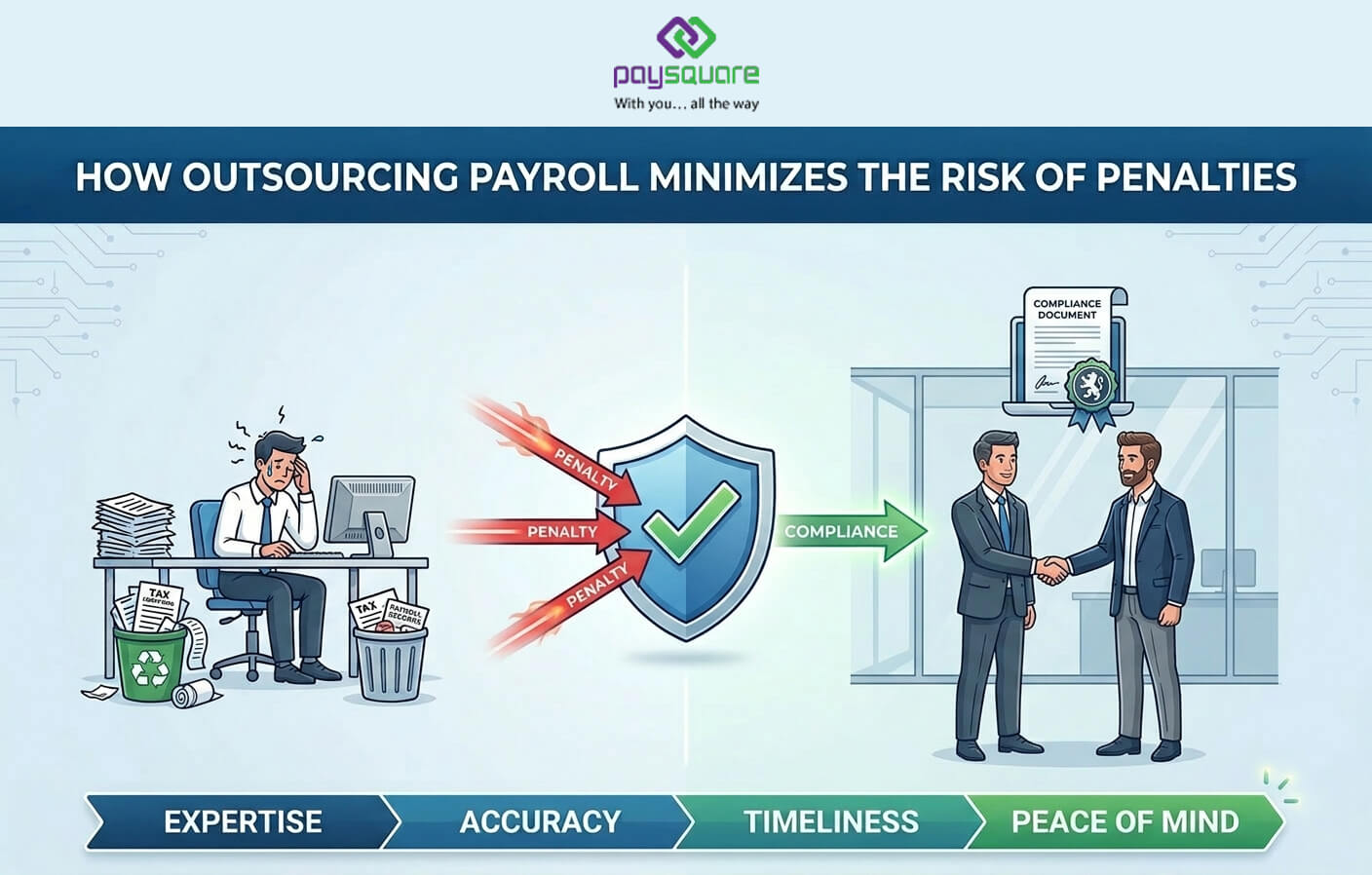
Outsourced payroll services ensure compliance with tax laws and financial regulations by maintaining accurate records and generating necessary reports. These services are regularly updated to reflect changes in regulatory requirements and mitigate the risk of legal issues and penalties. Companies that comply with the most recent regulatory standards can avoid costly fines and ensure seamless financial operations. Outsourced providers also provide expertise in navigating complex regulatory landscapes, giving the company peace of mind.
How Automation Transforms Expense Management
Below are some ways in which automation impacts various aspects of expense management:
- Automated Expense Reporting
Automation enables employees to submit expense reports quickly and conveniently using digital tools. Automated systems use mobile apps to gather receipts, categorize spending, and create results instantaneously. This saves the time and effort required for human data entry while also minimizing errors.
- Real-Time Data Processing
Payroll outsourcing companies have integrated automated systems that work in real-time to determine expenses and offer immediate access to the respective trends and tendencies. Real-time data processing means that the manager gets all the data at once and can make decisions based on the current situation. This increases control of company expenses since financial planning and budgeting are informed by the data immediately available.
- Policy Enforcement
Automated solutions guarantee compliance with organizational standards for spending and expenses since rules and regulations are programmed in the framework of the system. The general expenses that do not qualify for the established policies are automatically captured, and therefore, there is less chance of breaching the policies. This is because the enforcement of standards ensures there is order and equitable distribution of resources within the organization.
- Efficient Approval Workflows
Automated expense management systems also help simplify the approval process by forwarding the submitted expense reports to those managers who have the authority to approve such reports based on a set of rules. This helps to eliminate cases of delay and makes it easy to process the reimbursement. Notifications and reminders help managers go through the expenses more frequently and approve them as soon as possible.
- Integration with Payroll Systems
Automation allows seamless integration of expense management systems with payroll services for accurate and timely reimbursements. This integration eliminates the need for manual data transfer and reduces errors, which ensures that employees are reimbursed on their next paycheck. It also simplifies the reconciliation process and enhances overall financial accuracy.
- Fraud Detection and Prevention
Automated systems have advanced algorithms and machine learning to identify unusual spending patterns and potential fraud. These systems can automatically highlight suspicious transactions for further investigation and prevent fraudulent claims from being reimbursed. Regular audits and real-time monitoring further enhance fraud prevention efforts.
- Compliance and Audit Trails
Automation complies with tax laws and financial regulations by maintaining detailed records of all expense transactions. Automated systems generate comprehensive audit trails, which makes it simpler to conduct internal and external audits. This type of precision and transparency validates compliance with legal standards and lowers the risk of potential legal issues.
- Enhanced Employee Experience
Automation simplifies the expense reporting process for employees. This allows them to submit and track expenses effortlessly. Features like mobile access and digital receipts make it convenient for employees to manage their expenses on the go. This ease of use improves employee satisfaction and encourages the timely submission of expense reports.
- Data-Driven Insights
Automated systems provide powerful analytics and reporting tools that offer insights into spending behaviors and trends. Organizations can use this information to optimize budgets, find cost-saving options, and make strategic decisions. Data-driven insights help continuously improve expense policies and overall financial management.
- Scalability
Automated expense management systems offered by popular payroll outsourcing companies are highly scalable and easily accommodate the growing needs of an organization. As the company grows, the system can handle increased volumes of expense reports and transactions without compromising performance.
Benefits of Outsourcing Expense Management
Outsourcing expense management offers a number of advantages. Some of them are listed below:
- Cost Savings
Outsourcing eliminates the need for in-house personnel and resources committed to expense management, resulting in substantial cost reductions. It also eliminates the training, software, and infrastructure maintenance costs, allowing businesses to use capital more effectively.
- Scalability
Outsourced services are highly scalable, adapting to an organization's changing needs. Whether handling increased transaction volumes or expanding into new markets, outsourced payroll companies can adjust their services without disrupting operations.
- Focus on Core Activities
Companies can free up internal employees by outsourcing expense management to focus on their core activities. This allows employees to emphasize on strategic tasks that drive business growth and innovation rather than getting bogged down by administrative duties.
- Enhanced Employee Satisfaction
Outsourcing payroll improves the efficiency and accuracy of expense processing, which leads to timely reimbursements. When employees receive their reimbursements promptly, it boosts morale and satisfaction and builds a more positive work environment.
- Access to Expertise
Outsourcing provides access to specialized expertise and cutting edge technologies that may not be available in-house. Professional expense management providers stay updated on best practices, regulatory changes, and technological advancements, which ensures high-quality service and compliance with industry standards.
Implementing Payroll Outsourcing Services
Implementing payroll outsourcing services can significantly simplify expense management and reimbursement processes for organizations. By leveraging the advanced technology and expertise of outsourcing payroll providers, companies can benefit in different ways. Here are a few steps to implement the services of third-party payroll companies:
- Assessing Needs and Goals
The first step in implementing payroll outsourcing services is to evaluate your business's specific needs and objectives. Begin by understanding the current pain points in expense management. Identify goals such as cost reduction, efficiency improvement, and compliance. Determine the features required in an outsourced solution to meet these goals effectively.
- Selecting the Right Provider
Selecting the right payroll outsourcing provider is crucial. Look for a provider with a strong track record, relevant industry experience, and comprehensive service offerings. Evaluate potential providers based on their technology, security measures, customer service, and ability to scale with your business. A thorough selection process ensures that the selected provider aligns with your organizational needs.
- Customizing the Solution
The next step is customizing their solution to fit your specific expense management and reimbursement requirements. This includes configuring policies, approval workflows, integration with existing financial systems and setting up automated compliance checks. Customization ensures that the outsourced solution effectively addresses your unique processes and business rules.
- Training and Support
Successful implementation requires thorough training for your employees on how to use the new system. The outsourcing provider should offer comprehensive training sessions and ongoing support to ensure smooth adoption. Effective training minimizes resistance, enhances user experience, and maximizes the benefits of the new system.
- Monitoring and Optimization
After implementation, continuously monitor the system's performance and gather feedback from users. Regularly review the efficiency of expense management processes, compliance adherence and employee satisfaction. Use this data to optimize the system and make necessary adjustments to improve functionality and address any emerging issues immediately.
The Future of Expense Management
The future of expense management is poised to be transformed by several cutting-edge technologies, promising enhanced efficiency, accuracy, and transparency. Here are some key trends shaping the future:
- AI and Machine Learning
Artificial Intelligence (AI) and Machine Learning (ML) are set to revolutionize expense management. AI can automate the routine tasks such as data entry, expense categorization, and report generation. ML algorithms can analyze spending patterns to detect anomalies and potential fraud, ensuring greater security. Predictive analytics powered by AI can provide insights into future spending trends, helping businesses make more informed financial decisions. Payroll outsourcing companies can easily offer such advanced technologies at pocket-friendly prices.
- Blockchain Technology
Blockchain technology offers unparalleled transparency and security in expense management. It can create immutable records of all transactions, ensuring data integrity and preventing tampering. Smart contracts on blockchain can automate and impose compliance with expense policies, reducing the need for manual oversight. By providing a decentralized ledger, blockchain can facilitate faster and more secure reimbursements, enhancing trust among employees and employers.
- Mobile and Cloud Solutions
Mobile and cloud-based expense management solutions are becoming increasingly popular. These technologies allow employees to submit expenses on the go, using their smartphones or tablets. Cloud solutions offer real-time access to expense data, enabling managers to review and approve expenses from anywhere. This flexibility leads to faster processing times and improves overall efficiency. Additionally, cloud-based systems ensure data is backed up and safe, minimizing the risk of data loss.
- Integration with Financial Systems
Future expense management solutions will seamlessly integrate with other financial systems such as accounting software, payroll, and ERP systems. This integration will eliminate data silos, ensuring a smooth flow of information across various departments. It will also reduce manual data entry, minimize errors, and save time.
Conclusion
Payroll outsourcing services streamline expense management and reimbursement by streamlining processes and enhancing efficiency. They ensure timely and accurate reimbursements while maintaining compliance with company policies and regulatory requirements. By leveraging expert knowledge and advanced technology, third party payroll providers help organizations reduce costs and focus on their core activities.