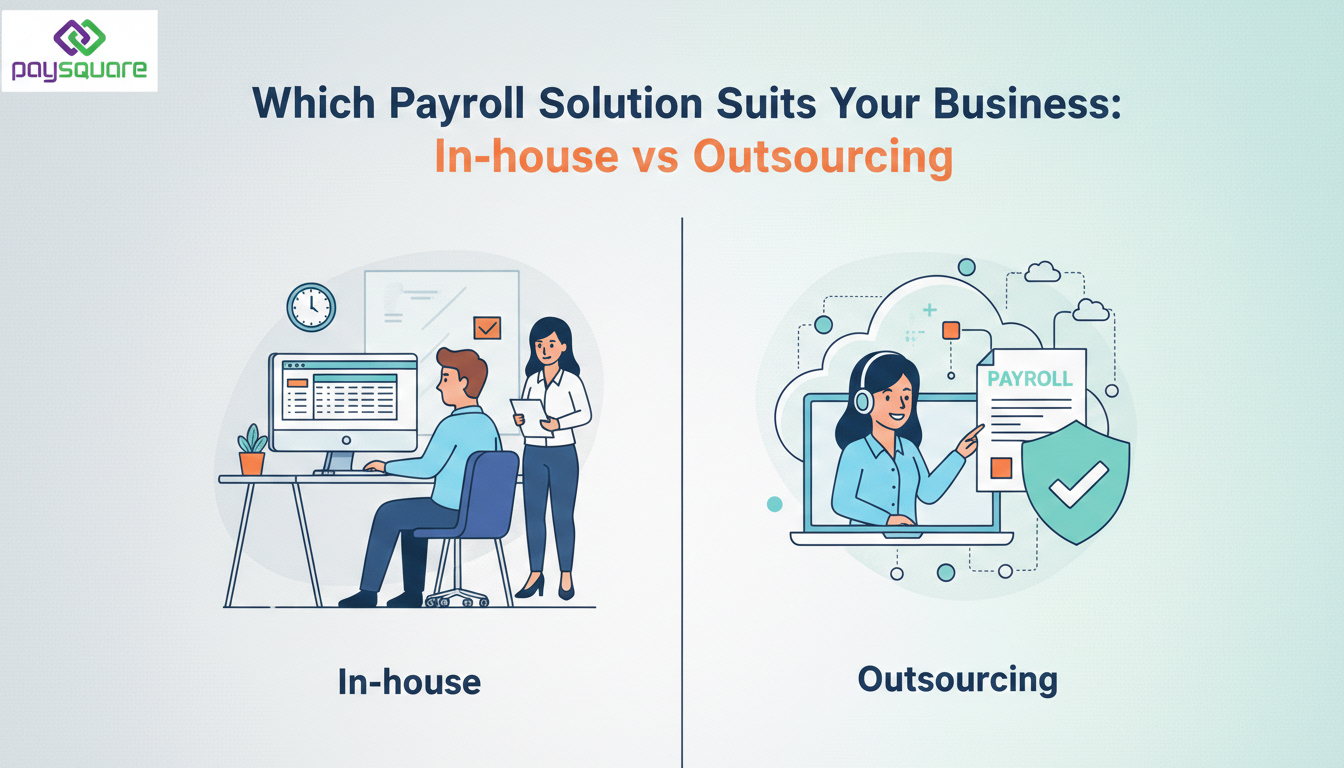
In today’s globalized economy, businesses are increasingly expanding across borders, and many rely on payroll outsourcing services to manage the challenges of global payroll—ensuring that employees in different countries are paid accurately, on time, and in compliance with local laws.
For businesses operating internationally, understanding key global payroll terms is critical. These terms impact not only salary processing but also compliance, taxation, employee satisfaction, and overall business efficiency.
Global Payroll: An Overview
Global payroll refers to the management of employee compensation across multiple countries. It includes salary disbursement, tax deductions, statutory contributions, benefits, and reporting in each country where a business operates.
Managing global payroll is complex due to:
- Different currencies
- Diverse tax laws
- Varied labour regulations
- Cultural differences in compensation structures
Understanding the key terms associated with global payroll outsourcing services helps organizations streamline operations and maintain compliance worldwide.
[caption id="attachment_29427" align="aligncenter" width="1200"]
 Key Terms in Global Payroll[/caption]
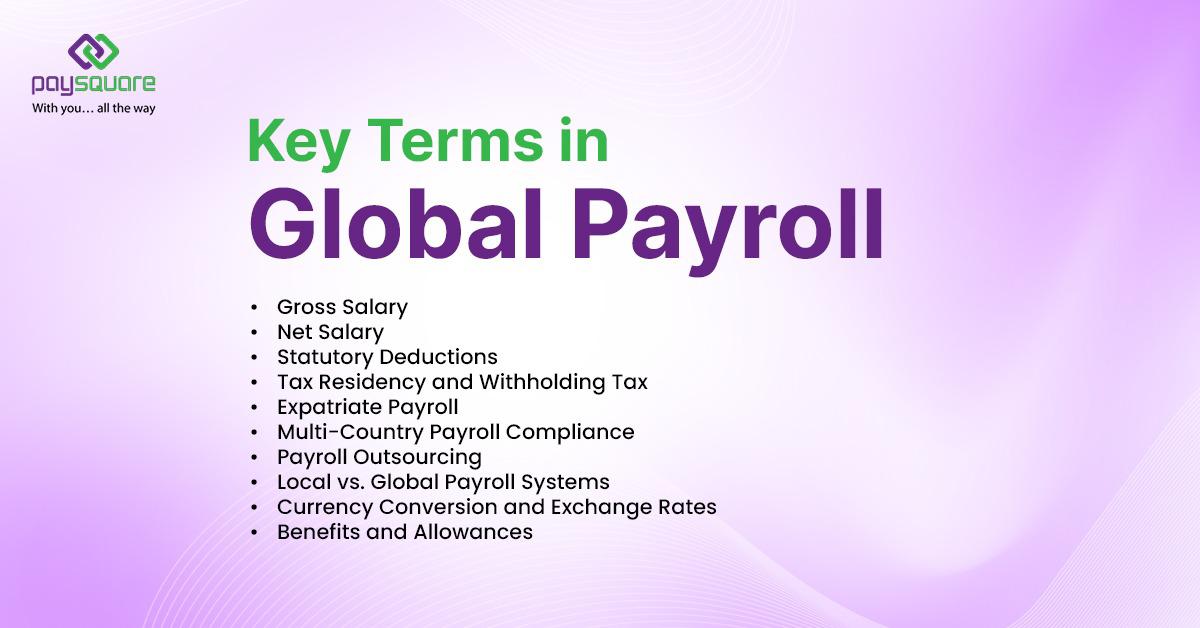
Key Terms in Global Payroll
Here are some of the most important terms every business should know:
a) Gross Salary
Gross salary is the total remuneration an employee earns before any deductions. It includes:
- Base pay
- Bonuses and incentives
- Allowances (housing, transport, meals, etc.)
- Overtime pay
Impact on business operations: Gross salary determines the overall payroll cost and forms the basis for calculating taxes, benefits, and statutory contributions. Accurate gross salary management is essential for budgeting and cost control.
b) Net Salary
Net salary is the amount an employee takes home after all deductions, such as taxes, social security, retirement contributions, and loan repayments.
Impact on business operations: Employees care most about net salary, making it critical for employee satisfaction and retention. Miscalculations can lead to dissatisfaction and disputes.
c) Statutory Deductions
These are mandatory deductions required by local laws. They vary by country and may include:
- Income tax
- Social security contributions
- Pension or provident fund contributions
- Health insurance premiums
Impact on business operations: Businesses must comply with each country’s regulations. Non-compliance can result in fines, legal penalties, and reputational damage.
d) Tax Residency and Withholding Tax
Tax residency determines which country an employee is subject to income tax. Withholding tax is the tax deducted at the source by the employer.
Impact on business operations: Understanding tax residency rules ensures proper tax compliance across borders. Mismanagement can create double taxation issues or disputes with tax authorities.
e) Expatriate Payroll
Expatriate payroll refers to compensation for employees working in a country other than their home country. This may include:
- Base salary in home or host country currency
- Housing and relocation allowances
- Tax equalisation or protection benefits
Impact on business operations: Managing expatriate payroll requires complex calculations and compliance with both home and host country laws. Proper management ensures employee satisfaction and cost control.
f) Multi-Country Payroll Compliance
This term refers to the need to adhere to labor laws, tax regulations, and social security requirements in every country where the company operates.
Impact on business operations: Non-compliance can lead to audits, fines, and legal disputes. Global payroll outsourcing solutions help businesses maintain compliance in multiple jurisdictions.
g) Payroll Outsourcing
Payroll outsourcing involves delegating payroll processing and compliance to a third-party provider. In a global context, it often includes cross-border payroll management, currency conversion, and statutory filings.
Impact on business operations: Outsourcing reduces administrative burden, mitigates risk, and allows HR teams to focus on strategic initiatives.
h) Local vs. Global Payroll Systems
A local payroll system handles payroll within one country, while a global payroll system integrates payroll across multiple countries into one unified platform.
Impact on business operations: A global payroll system provides centralized reporting, cost tracking, and consistency across operations, making it easier to manage a distributed workforce.
i) Currency Conversion and Exchange Rates
In global payroll, salaries may be paid in different currencies. Employers must account for exchange rates, conversion fees, and currency fluctuations.
Impact on business operations: Proper currency management reduces the risk of overpayment or underpayment and ensures accurate financial reporting.
j) Local Laws and Company Policy
Global payroll includes managing benefits such as health insurance, retirement contributions, bonuses, and allowances. These vary depending on local laws and company policy.
Impact on business operations: Correct benefits management ensures employee satisfaction, statutory compliance, and accurate budgeting.
How Key Payroll Terms Impact Business Operations
Understanding these terms is more than a theoretical exercise; they have real operational consequences:
- Compliance Management
Incorrect handling of statutory deductions, tax withholding, or expatriate payroll can result in fines and audits. Businesses must understand local laws and global payroll terms to stay compliant. - Cost Control
Gross salary, benefits, allowances, and exchange rate management directly affect total payroll costs. Clear understanding helps organizations budget effectively and optimize ROI. - Employee Satisfaction
Accurate net pay, timely salary disbursement, and transparent benefits foster trust and reduce attrition. Mismanagement can impact morale and productivity. - Reporting and Analytics
Global payroll systems provide insights into labor costs, payroll trends, and compliance status. Understanding payroll terms ensures accurate analysis for strategic decision-making. - Operational Efficiency
Unified global payroll processes reduce manual errors, administrative workload, and reconciliation issues, freeing HR teams for higher-value activities.
Best Practices for Managing Global Payroll
To manage global payroll effectively, businesses should adopt these best practices:
- Invest in a reliable global payroll system to integrate all countries into one platform
- Stay updated with local labour laws and tax regulations in each operating country
- Standardise payroll terminology across regions to ensure consistency
- Leverage automation to reduce manual calculations and errors
- Regularly audit payroll processes to ensure accuracy and compliance
- Educate HR teams and employees about payroll processes, payslips, and deductions
- Consider outsourcing to experienced payroll providers for cross-border compliance and reporting
The Role of Technology in Global Payroll
Technology plays a crucial role in efficiently managing global payroll. Modern solutions offer:
- Automation of payroll calculations and statutory filings
- Multi-country compliance management
- Reporting dashboards for HR and finance teams
- Employee self-service portals for payslips, tax documents, and claims
- Secure data storage and audit trails to protect sensitive payroll information
By leveraging technology, businesses can handle complex payroll operations with accuracy, speed, and compliance.
Conclusion
Global payroll is a critical component of international business operations. Understanding key payroll terms, including gross and net salary, statutory deductions, tax residency, expatriate payroll, and multi-country compliance, is essential for managing payroll accurately and efficiently.
These terms directly impact business operations, employee satisfaction, compliance, and cost management. Companies that fail to understand them risk errors, penalties, and employee dissatisfaction.
Technology and professional payroll outsourcing services can simplify global payroll, reduce administrative burden, ensure compliance, and improve operational efficiency.
Why Choose Paysquare for Global Payroll Management
Paysquare is a trusted payroll outsourcing services partner with extensive experience in managing payroll across multiple countries. Their advanced global payroll solutions ensure:
- Accurate salary calculations and statutory compliance in every operating country
- Automated payroll processing and reporting for efficient operations
- Secure employee data management with cloud-based systems
- Expert support for expatriate payroll, tax filings, and benefits management
With Paysquare, businesses can confidently manage their global workforce, streamline operations, and focus on growth while ensuring payroll accuracy and compliance.
Paysquare, your partner for seamless, accurate, and compliant global payroll management.