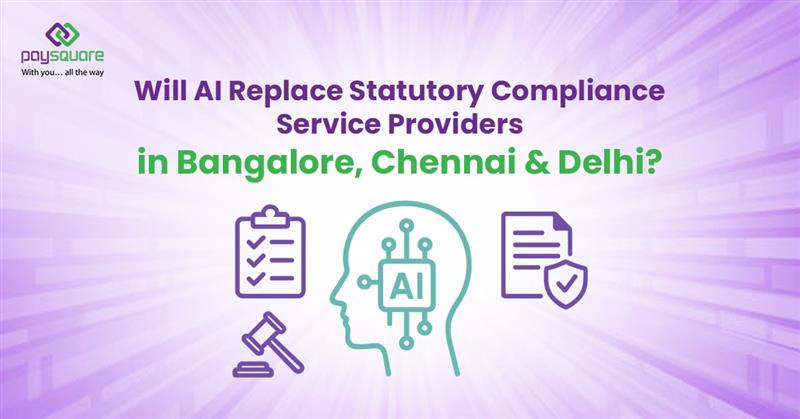
Will AI Replace Statutory Compliance Service Providers in Bangalore, Chennai & Delhi?
In today's business landscape, statutory regulations have become increasingly significant. Companies operating in Bangalore, Chennai, and Delhi navigate a highly regulated environment, where non-compliance can lead to penalties, heavy fines, and reputational damage, making statutory compliance services in Delhi essential. Companies were generally dependent on statutory bodies for compliance services, which help in getting through the intricacies of labour laws, tax regulations, environmental norms, and corporate governance. These experts ensure the organisation complies with the various statutory requirements and keeps all records in order to avoid any pitfalls related to regulations.
Nonetheless, the rise of Artificial Intelligence (AI) has propagated a plethora of discussions: namely, can technology replace those service providers? AI promises automation, real-time monitoring, predictive analytics, and enhanced efficiency at the possible expense of human expertise. But can a machine handle the nuances of statutory compliance, legal interpretation, and client-specific advisory services?
Understanding Statutory Compliance
Statutory compliance refers to adhering to legal requirements that govern business operations. Key areas include:
Tax Compliance: Timely filing of GST, Income Tax, and other statutory taxes.
Labour Law Compliance: Observing regulations related to wages, work hours, employee welfare, and social security contributions.
Corporate Governance: Maintaining transparency in reporting and financial disclosures.
Environmental Regulations: Ensuring business operations meet legal environmental standards.
In cities such as Bangalore, Chennai, and Delhi, where industries are diverse and fiercely competitive, statutory compliance is essential for business continuity and growth. Availing statutory compliance services in Delhi can help prevent audits, penalties, or even legal actions.
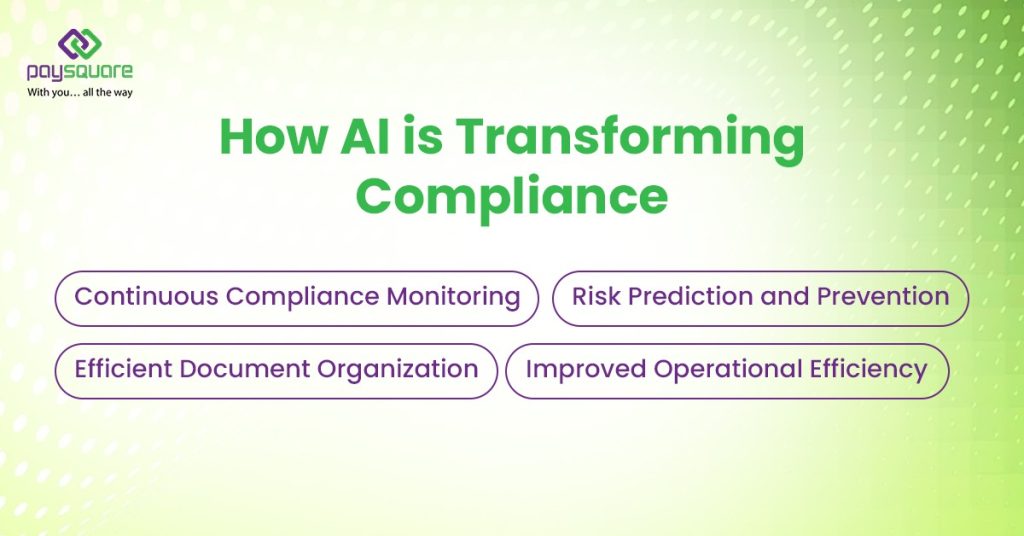
[caption id="attachment_29081" align="aligncenter" width="1024"] How AI is Transforming Compliance[/caption]
How AI is Transforming Compliance
AI is reshaping statutory compliance by introducing efficiency, accuracy, and predictive capabilities. Its adoption brings several benefits for businesses:
Continuous Compliance Monitoring: AI platforms track compliance in real time, identifying irregularities or missing information and alerting teams to take immediate corrective action.
Risk Prediction and Prevention: By analysing past compliance data, AI can forecast potential issues such as delayed filings or payroll inconsistencies, enabling organisations to proactively mitigate risks.
Efficient Document Organisation: AI solutions can categorise, store, and retrieve critical compliance records quickly, ensuring that audit-ready documents are always accessible.
Improved Operational Efficiency: By reducing manual intervention, AI saves time and lowers administrative costs, allowing HR and finance teams to focus on strategic initiatives rather than routine compliance tasks.
Challenges of AI in Statutory Compliance
Even with its advantages, adopting AI for statutory compliance comes with certain challenges:
Protection of Sensitive Data Payroll and compliance information is highly confidential. Any data breach can result in legal consequences and damage to reputation. Ensuring strong security measures, such as encryption and controlled access, is essential.
Compatibility with Legacy Systems Many companies still use older HR and payroll systems. Integrating AI tools into these platforms can be technically challenging and may require significant investment.
Acceptance by Regulatory Authorities Although AI can produce detailed reports and insights, regulators may still require human verification. The legal recognition of AI-generated compliance outputs is still developing.
Need for Skilled Personnel Effective AI implementation requires professionals who can operate AI systems, analyse outputs, and manage workflows. Organisations may need to train existing staff or hire new experts.
Bias and Ethical Issues The accuracy of AI depends on the data provided. Incomplete or biased datasets can lead to incorrect results, potentially impacting compliance decisions and ethical standards.
Can AI Replace Statutory Compliance Providers?
While AI brings efficiency and predictive power, it cannot completely replace human expertise in statutory compliance. Here's why:
1. Human Expertise and Judgment
Compliance often involves interpreting ambiguous or complex laws. Professionals apply judgment and experience to make decisions that AI alone cannot replicate.
2. Legal Representation
In case of audits, disputes, or legal proceedings, human professionals are indispensable. AI cannot represent organisations before regulatory authorities.
3. Client Relationship Management
Compliance service providers build trust through personalised advisory services, consultations, and ongoing support—areas where AI cannot replace human interaction.
4. Ethical Oversight
Humans ensure ethical handling of sensitive data, fairness in payroll processing, and adherence to corporate governance principles. AI alone may overlook nuanced ethical considerations.
A Collaborative Approach: Humans + AI
Instead of replacing service providers, AI is better seen as a tool that enhances their efficiency. A collaborative approach offers multiple benefits:
Enhanced Accuracy: AI reduces errors in repetitive tasks, allowing professionals to focus on complex compliance issues.
Faster Processing: Routine filings and calculations can be completed more quickly.
Predictive Insights: AI analyses patterns, helping providers forecast risks and take preventive measures.
Resource Optimisation: Teams can dedicate time to strategic initiatives rather than manual data entry.
By combining AI technology with human expertise, organisations can achieve a balanced approach to compliance management.
Future Outlook
The future of statutory compliance services in Delhi, as well as in cities like Bangalore and Chennai, is likely to be shaped by AI-assisted processes rather than complete automation. Businesses are increasingly leveraging AI to streamline compliance, reduce errors, and enhance decision-making, while still relying on human expertise for strategic guidance.
1. Predictive Compliance Analytics
AI can analyse historical payroll and HR data to anticipate potential compliance risks. By identifying patterns in past filings, payroll discrepancies, or regulatory changes, organisations can proactively address issues before they escalate into legal problems. This predictive approach enables businesses to stay one step ahead, minimising the risk of penalties and operational disruptions.
2. Integrated Compliance Platforms
Future compliance solutions will integrate payroll, HR, and finance systems into a unified platform. Such integration ensures seamless data flow, reduces manual intervention, and allows organisations to access real-time insights across departments. Businesses can monitor compliance activities efficiently and respond quickly to any anomalies.
3. AI-Enhanced Advisory Services
AI tools will provide actionable insights that professionals can use to offer more strategic guidance. HR and compliance teams can focus on interpreting these insights to optimise processes, advise management, and ensure that regulatory requirements are met effectively.
4. Mobile and Cloud Access
Remote monitoring through mobile and cloud platforms will enable real-time reporting, giving businesses flexibility and immediate visibility into compliance operations. Teams can access data from anywhere, ensuring timely interventions and faster decision-making.
The next decade will see AI becoming an indispensable assistant, increasing efficiency and accuracy while human providers continue to deliver strategic, judgment-based guidance.
Looking for reliable payroll service providers in India? Paysquare combines advanced technology with expert professionals to help businesses in Bangalore, Chennai, and Delhi remain fully compliant, allowing them to focus on growth and strategic initiatives.

 In today's business landscape, statutory regulations have become increasingly significant. Companies operating in Bangalore, Chennai, and Delhi navigate a highly regulated environment, where non-compliance can lead to penalties, heavy fines, and reputational damage, making statutory compliance services in Delhi essential. Companies were generally dependent on statutory bodies for compliance services, which help in getting through the intricacies of labour laws, tax regulations, environmental norms, and corporate governance. These experts ensure the organisation complies with the various statutory requirements and keeps all records in order to avoid any pitfalls related to regulations.
Nonetheless, the rise of Artificial Intelligence (AI) has propagated a plethora of discussions: namely, can technology replace those service providers? AI promises automation, real-time monitoring, predictive analytics, and enhanced efficiency at the possible expense of human expertise. But can a machine handle the nuances of statutory compliance, legal interpretation, and client-specific advisory services?
In today's business landscape, statutory regulations have become increasingly significant. Companies operating in Bangalore, Chennai, and Delhi navigate a highly regulated environment, where non-compliance can lead to penalties, heavy fines, and reputational damage, making statutory compliance services in Delhi essential. Companies were generally dependent on statutory bodies for compliance services, which help in getting through the intricacies of labour laws, tax regulations, environmental norms, and corporate governance. These experts ensure the organisation complies with the various statutory requirements and keeps all records in order to avoid any pitfalls related to regulations.
Nonetheless, the rise of Artificial Intelligence (AI) has propagated a plethora of discussions: namely, can technology replace those service providers? AI promises automation, real-time monitoring, predictive analytics, and enhanced efficiency at the possible expense of human expertise. But can a machine handle the nuances of statutory compliance, legal interpretation, and client-specific advisory services?
 How AI is Transforming Compliance[/caption]