
The rise of remote work has transformed the global employment landscape, enabling companies to tap into talent pools across borders. However, this flexibility introduces a complex web of payroll and labour law considerations. Knowing these effects is important for businesses that want to stay compliant and improve their remote workforce management with labour law services.
Understanding Remote Work Payroll Implications
1. Tax Withholding and Social Security Contributions
Employers must navigate varying tax obligations based on the employee’s location. For instance, in India, companies are required to withhold income tax at source (TDS) and contribute to social security schemes like the Employees’ Provident Fund (EPF) and Employees’ State Insurance (ESI) for eligible employees. Failure to comply can result in penalties and interest charges.
2. Permanent Establishment (PE) Risk
Hiring remote workers in different jurisdictions can inadvertently create a Permanent Establishment (PE), subjecting the company to local corporate taxes. This is particularly pertinent in countries with stringent PE rules, such as India, where a PE can be established if a foreign company has a fixed place of business or dependent agents in the country.
3. Currency and Payment Methods
Paying remote employees in different currencies requires careful consideration of exchange rates and transaction fees. Utilizing international payroll platforms can streamline this process, ensuring timely and accurate payments while minimizing costs.
Labor Law Considerations for Remote Workers
1. Employment Classification
Correctly classifying workers as employees or independent contractors is vital. Misclassification can lead to legal disputes and financial liabilities. For example, in India, employees are entitled to statutory benefits like paid leave and gratuity, which are not applicable to independent contractors.
2. Compliance with Local Labour Laws
Each jurisdiction has its own set of labour laws governing aspects such as working hours, overtime, and termination procedures. Employers need to follow the law to avoid legal issues. In India, labour law services cover rules from acts like the Industrial Disputes Act and the Shops and Establishments Act that govern different employment matters.
3. Health and Safety Regulations
Employers have a duty to ensure the health and safety of their employees, even when working remotely. This includes providing ergonomic workstations and addressing mental health concerns. In India, while traditional health and safety regulations focus on physical office environments, companies should adapt these guidelines to remote settings.
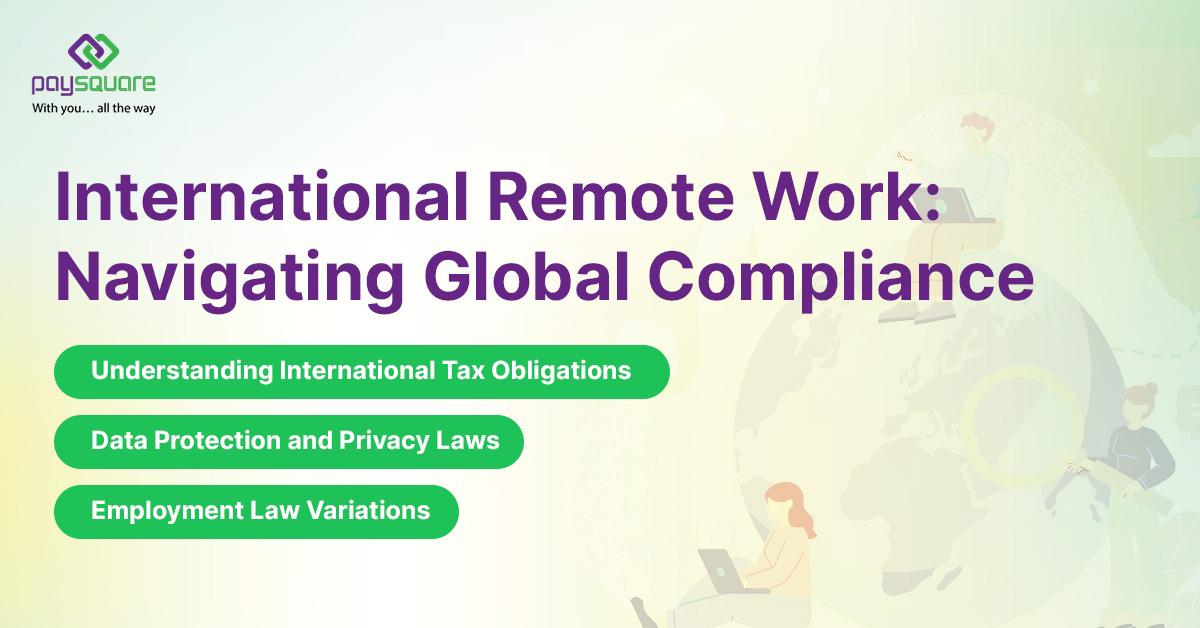
International Remote Work: Navigating Global Compliance
1. Understanding International Tax Obligations
Hiring remote workers internationally introduces complexities such as varying income tax rates, social security contributions, and potential double taxation. Employers must familiarise themselves with the tax laws of the employee’s home country and any applicable tax treaties to ensure compliance.
2. Data Protection and Privacy Laws
Remote work often involves handling sensitive data across borders. Employers must comply with data protection regulations such as the General Data Protection Regulation (GDPR) in the European Union and the Information Technology Act in India. This includes implementing secure data storage and transmission practices.
3. Employment Law Variations
Labour laws differ widely from country to country. For instance, European countries usually have strict rules to protect employees, such as limits on working hours and paid leave requirements. Employers need to adjust their policies to comply with local regulations, and labour law services can help ensure compliance.
Best Practices for Managing Remote Workforce Compliance
1. Establish Clear Employment Contracts
Draft comprehensive contracts that outline the terms of employment, including job responsibilities, compensation, and benefits. This helps set clear expectations and provides legal protection for both parties.
2. Implement Robust Payroll Systems
Utilise reliable payroll software or services to manage payments, tax withholdings, and compliance with local regulations. This reduces the risk of errors and ensures timely payments.
3. Regularly Review and Update Policies
Keep up-to-date with changes in labour laws and tax rules in all areas where your remote employees work. Regularly revise company policies to reflect these updates and ensure compliance with labour law services.
4. Provide Training and Resources
Offer training to HR personnel and remote workers on compliance requirements, data security practices, and company policies. This fosters a culture of compliance and reduces the likelihood of inadvertent violations.
Conclusion
Managing a remote workforce needs a clear understanding of payroll rules and labour laws in India and abroad. Using the right labour law services and following best practices helps companies handle remote work effectively and stay compliant in all regions.
For businesses seeking expert assistance in managing their remote workforce, Paysquare offers comprehensive solutions tailored to your needs. Our team of experts provides payroll services and manages labour law compliance, so you can focus on growing your business. Reach out to Paysquare today to learn how we can support your remote workforce management.


